
Last updated November 22, 2026
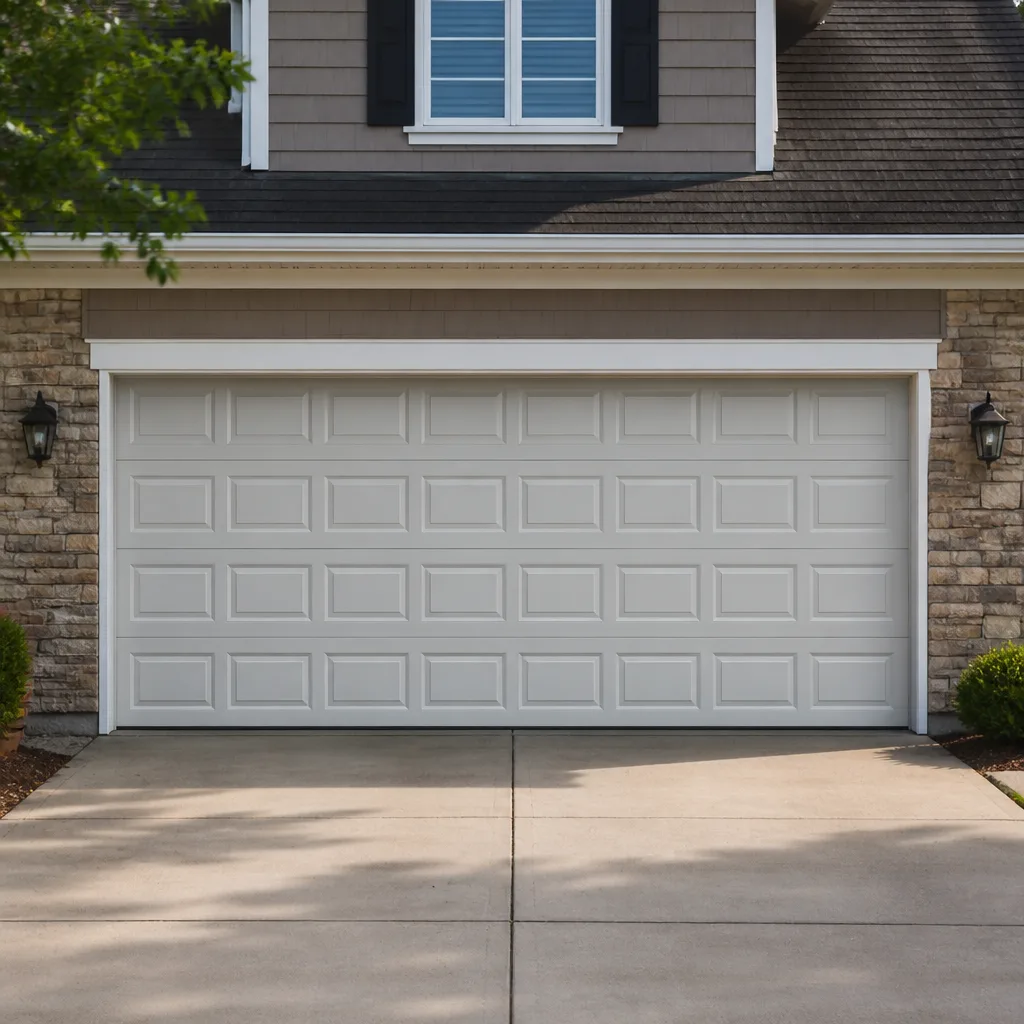 Raised-panel steel
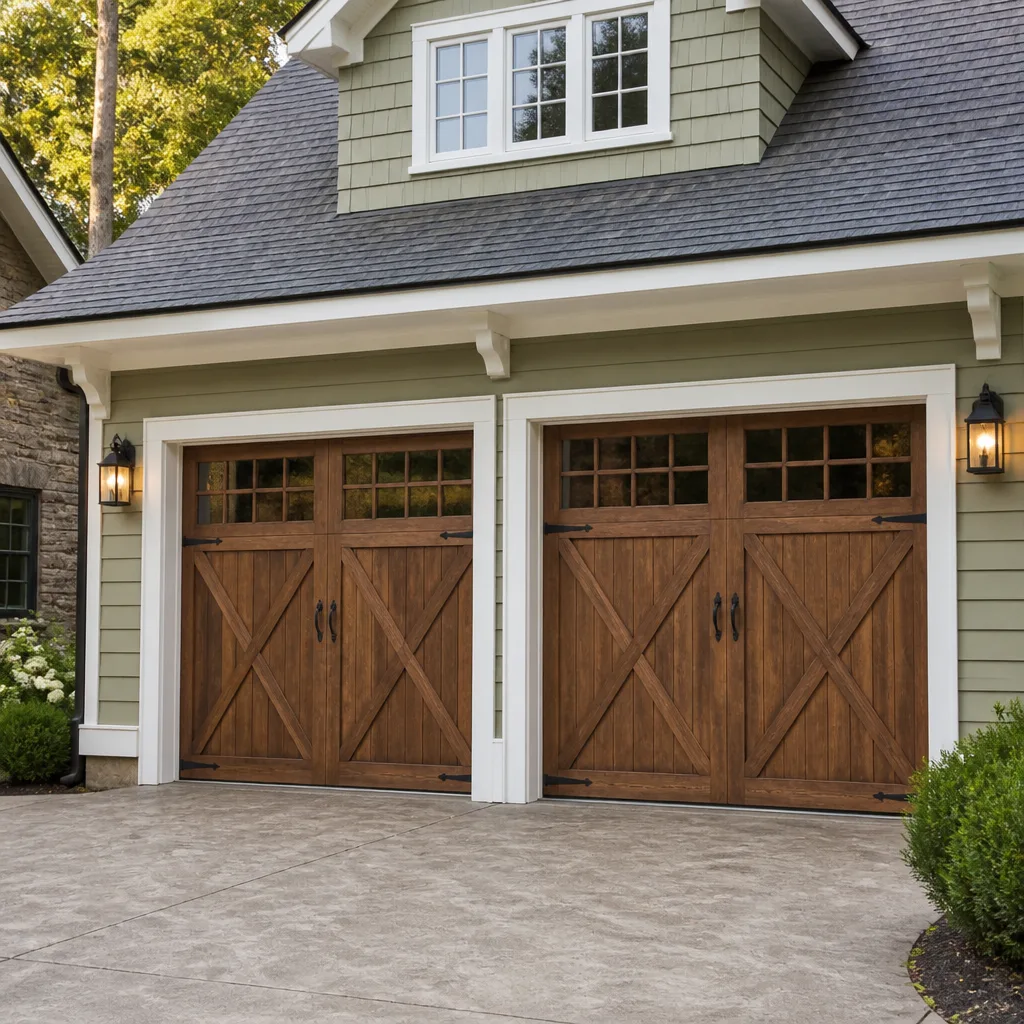 Carriage house
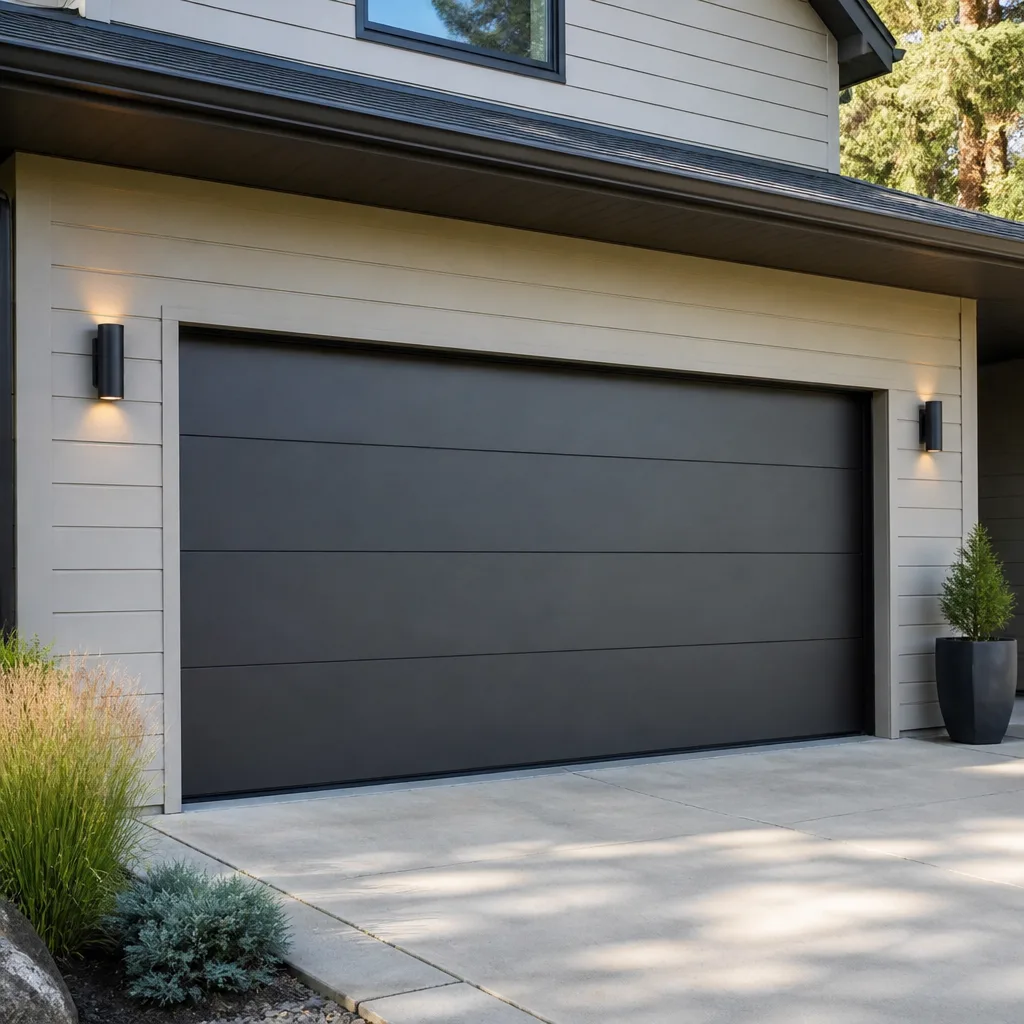 Modern flush
 Full-view glass
 LiftMaster openers
 Chamberlain openers
Full 25-point door and opener safety check with every visit - springs, cables, rollers, tracks, and your LiftMaster or Chamberlain opener included
You get a price before we start. It does not change when the pro arrives.
Get your free estimateThe Complete Guide to Garage Doors in Brockton
Your garage door moves more times per day than your front door does in a week, and most people couldn’t name three of its moving parts until one of them fails at 7 AM. That’s the strange thing about the biggest, heaviest, most-used opening in a house: it stays invisible until it stops. A snapped spring, a door that drifts off its track, an opener that hums and does nothing – these failures feel sudden, but they almost always trace back to one or two components that were wearing out quietly for months.
This guide maps the whole system. You’ll learn what the parts are, which ones fail first in Brockton’s climate, where the money actually goes, and how to tell a panel problem from a hardware problem from an opener problem before anyone quotes you a price. By the end, you’ll know what you own.
Quick Answer
A garage door is a system of interdependent parts – springs, cables, rollers, hinges, tracks, panels, and the opener – and most failures start with one or two neglected components rather than the door as a whole. In Brockton, freeze-thaw cycles, humid summers, and road salt tracked into the garage wear springs, cables, and bottom seals faster than a homeowner expects. The right repair fixes the actual cause, not the symptom, and a full-spectrum specialist handles springs, openers, panels, and installation so no vendor points at another when something fails.
Styles & brands we work with
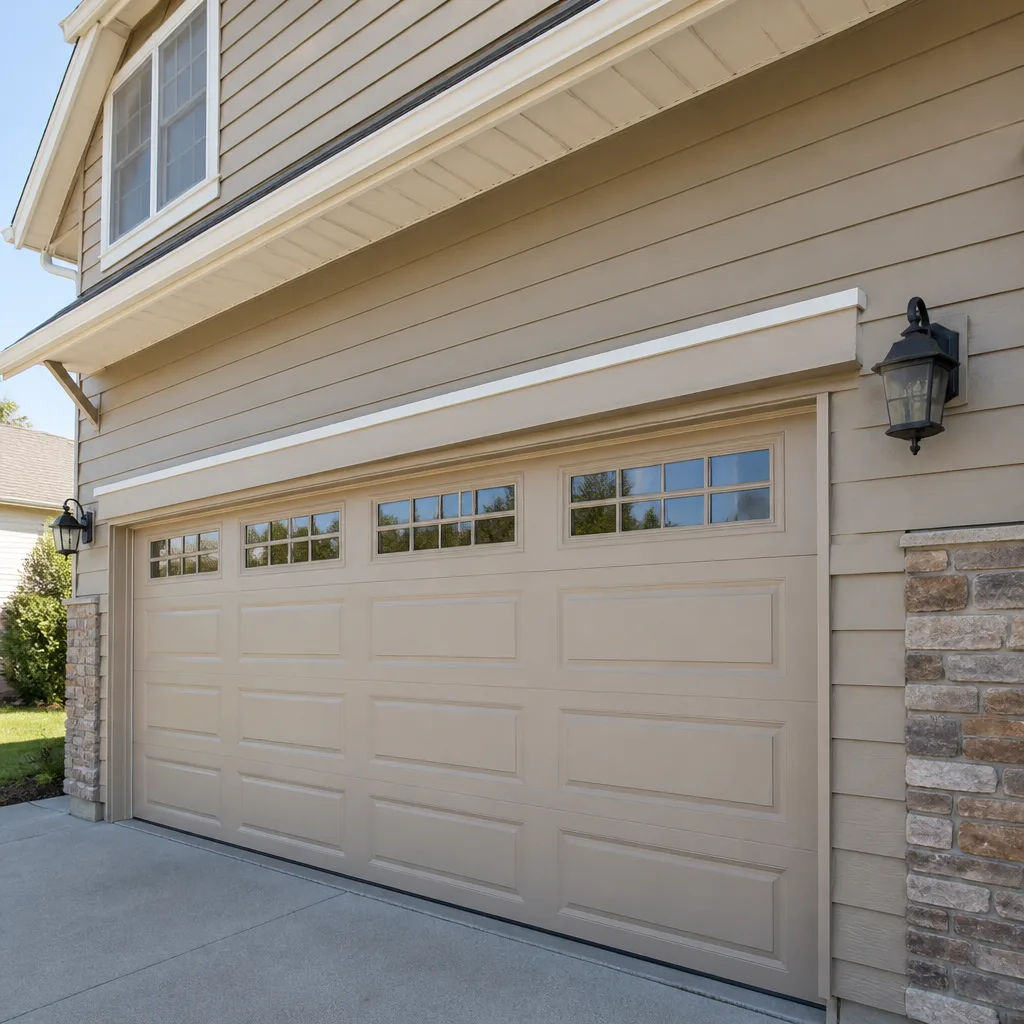
- Raised-panel steel
- Carriage house
- Modern flush
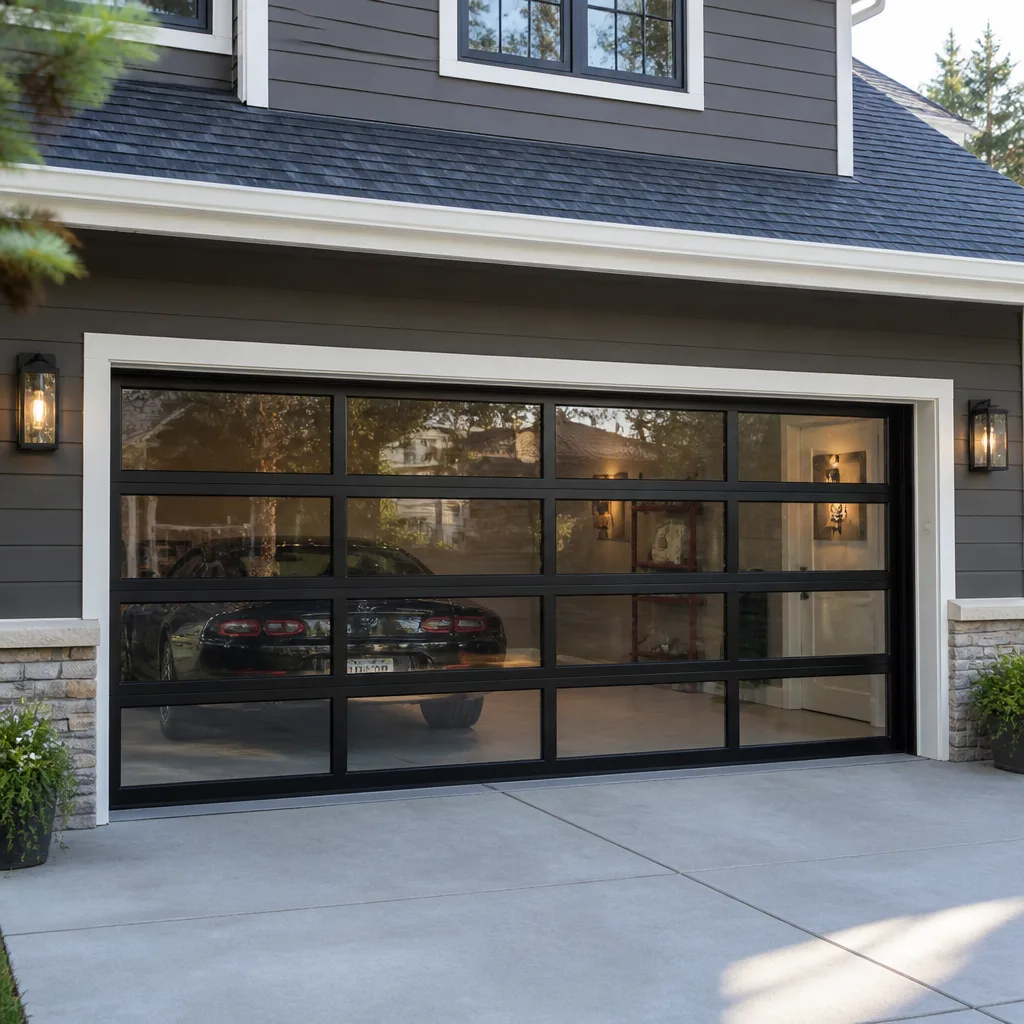
- Full-view glass
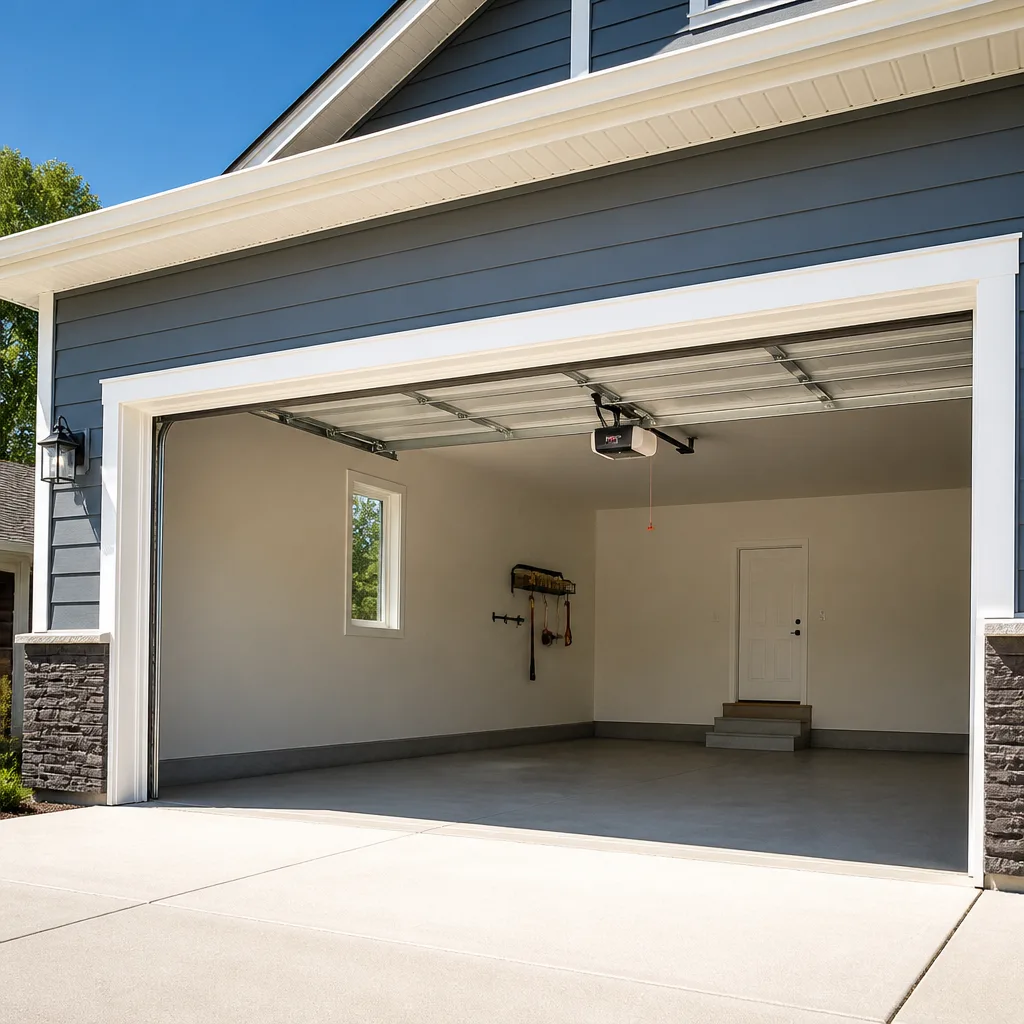
- LiftMaster openers
- Chamberlain openers
Table of Contents
- How a Garage Door Actually Works
- How Brockton’s Climate Wears Your Door Down
- Panel, Hardware, or Opener? How to Tell What’s Broken
- Torsion vs. Extension Springs in New England
- Door Styles and Materials That Fit Brockton Homes
- What to Know About Your Opener
- What “Full Service Spectrum” Really Means
- What Garage Door Work Typically Costs in Brockton
How a Garage Door Actually Works
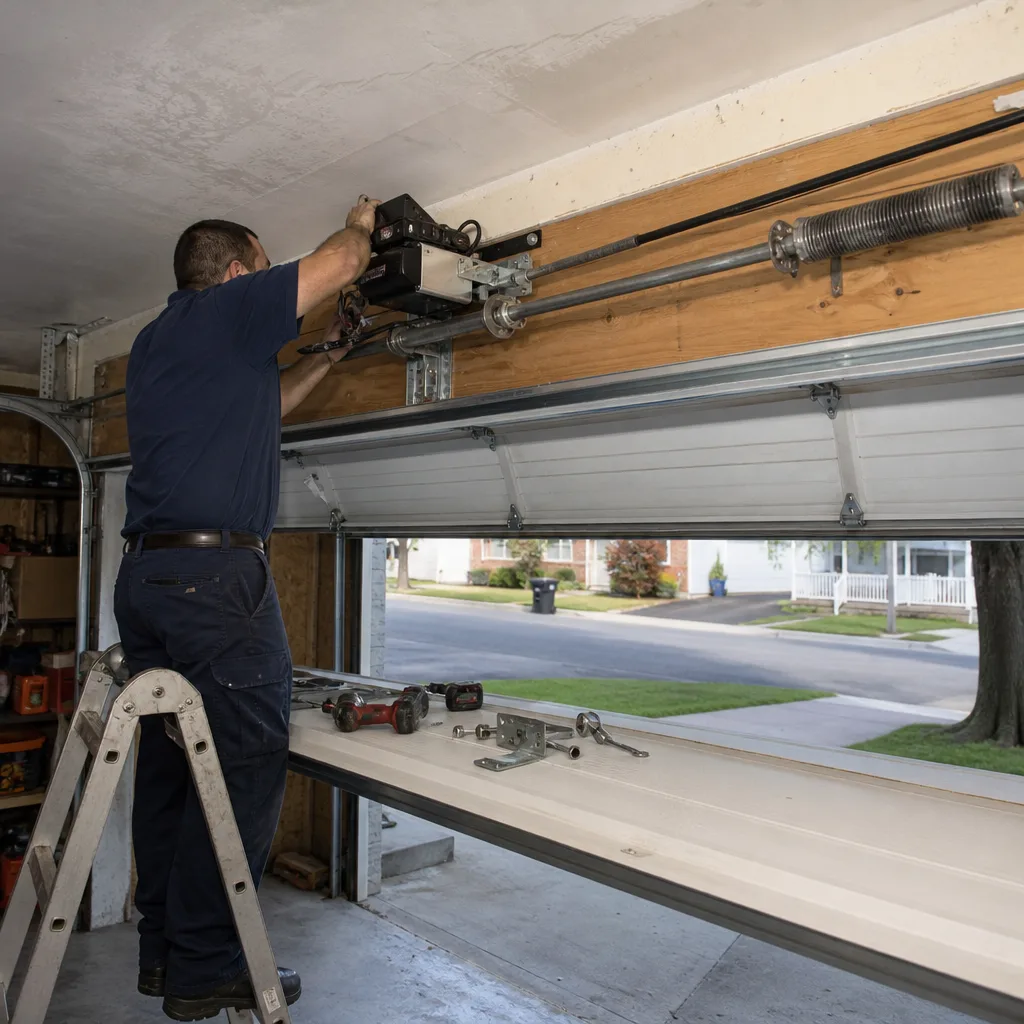
A sectional garage door is a balanced system, not a motorized slab. The opener doesn’t lift the door’s weight – the springs do. The opener just guides the door along its track while the springs carry most of the load. That distinction matters, because when a door feels heavy, binds, or reverses unpredictably, the problem is usually in the balance system, not the motor. Replacing an opener won’t fix a door with a failing spring, and homeowners who try learn an expensive lesson.
Here’s the anatomy of the system, in the order the door moves:
- Springs – torsion springs sit on a shaft above the door; extension springs run along the sides. They store the energy that counterbalances the door’s weight.
- Cables – steel cables connect the springs to the bottom corners of the door and transfer tension along the sides. A frayed or slack cable is a serious safety issue.
- Drum and bearings – on torsion systems, the drums wind the cables and the bearings let the shaft spin freely.
- Rollers and hinges – rollers ride in the track; hinges connect the panels. These are the wear parts you’ll replace most often.
- Tracks – the steel rails that keep the door on its path. Bent tracks cause binding and off-track doors.
- Panels – the door’s face and structure. Dents, rot, and split skins are panel problems, not hardware problems.
- Opener and controls – the motor, rail, and safety sensors. The opener is the brain; the springs are the muscle.
In our experience, when a door is binding or won’t stay down, the fix is almost always in items one through four, not item seven. Knowing that one fact saves Brockton homeowners from paying for the wrong repair. If you want the full breakdown of how these parts get serviced, our garage door repair page walks through each failure mode.
How Brockton’s Climate Wears Your Door Down
Brockton sits in a freeze-thaw climate, and that single fact drives most of the wear on a garage door here. Water gets into small gaps – around the bottom seal, behind hinges, in the tracks – then expands when it freezes overnight and pushes parts apart. When it thaws, the gap widens. Repeat that cycle across a winter and the seals flatten, the hinge screws loosen, and the metal starts to fatigue. Homeowners often notice it first as a door that rattles or a draft along the floor of the garage.
Summer adds its own pressure. Humid air works on the wood portions of older doors, swelling the panels and putting extra strain on the hinges. Road salt tracked into the garage from Brockton’s plowed streets attacks the bottom brackets, hinges, and any bare metal on the frame. Springs, meanwhile, are cycling hundreds of times a month, and temperature swings alter the tension slightly each cycle.
What this means in practical terms:
- Springs fatigue faster in temperature swings than in stable climates. A spring rated for a service life on paper often delivers less in a freeze-thaw zone.
- Cables fray at the bottom corners where water collects. Frayed strands are a warning, not a normal condition.
- Bottom seals flatten and crack within a few seasons, letting in cold air, water, and small pests.
- Hinges and rollers loosen and dry out. Metal-on-metal contact accelerates wear, and lubrication gets neglected.
None of this is dramatic. It’s the slow grind of a climate that tests every moving part twice a year. A door in Brockton that gets looked over once a season outlasts a door that only gets attention when it breaks.
Panel, Hardware, or Opener? How to Tell What’s Broken
Misdiagnosis is the most common reason homeowners overspend on garage door work. A door that won’t close could need a $30 sensor alignment, a $200 spring job, or a $50 hinge replacement – and the price varies by an order of magnitude depending on which. Telling them apart before you call keeps the quote honest and the fix right the first time.
Here’s how to separate the three categories by symptom:
Panel issues
- You can see a dent, crack, or rot mark in the door face.
- The door looks warped or uneven when closed from the street.
- A single panel bows while the rest of the door stays straight.
- Water gets through in heavy rain, or daylight shows at the seams.
Panel damage is cosmetic or structural. It doesn’t usually affect how the door moves unless the panel has swelled enough to bind in the track.
Hardware issues
- The door is heavy to lift by hand or won’t stay halfway up.
- You hear a loud bang from the garage (the classic past-tense sound of a snapping spring).
- The door drifts off-center or comes off the track.
- You can see a gap in a cable, a bent track, or a loose hinge.
Hardware is the balance and guidance system. This is where most true failures live.
Opener issues
- The motor runs but the door doesn’t move, or the chain is slack.
- The door reverses immediately or won’t close all the way.
- The wall button works but the remote doesn’t, or vice versa.
- The opener light blinks in a pattern.
Opener faults are electrical or control faults. Modern units from LiftMaster, Chamberlain, Genie, and Craftsman use different diagnostic patterns, which is why brand familiarity matters. If you’re narrowing down an opener problem, that’s a good time to look at garage door opener repair and what a technician checks on your exact system.
The key rule: a panel problem looks wrong, a hardware problem feels wrong, and an opener problem sounds wrong. If you’re unsure, describe the symptom over the phone and skip a step.
Torsion vs. Extension Springs in New England
Torsion springs generally outlast extension springs in New England conditions, and most newer doors in Brockton use torsion systems for that reason. Torsion springs sit on a shaft above the door and twist to counterbalance the weight. Extension springs stretch along the sides and anchor to brackets at the rear of the track. Both store the energy that lifts the door, but they fail differently.
Here’s the comparison that matters when you’re deciding what to replace:
- Torsion springs sit in a contained position on a single shaft, so when they fail they usually break in place. Extension springs can snap free and swing, which is why they’re required in many jurisdictions to have a safety containment cable – one that runs through the spring to catch it if it breaks.
- Torsion systems handle heavier doors and larger openings more evenly. Extension springs wear unevenly between the two sides.
- Cycle life is measured in open-close cycles, not years. A door used twice a day lasts far longer on the same spring than one used a dozen times a day.
- Repair cost for a torsion job is usually higher than an extension swap, but the cost per year of service tends to be lower.
When a spring snaps, the door is effectively unsupported. Don’t run the opener, don’t try to lift the door by hand, and don’t attempt a replacement yourself. Torsion springs and the cables under tension store enough energy to cause serious injury, and this is one of the few parts of a home where a trained professional genuinely should do the work. The correct next step is to call for garage door spring repair and let the technician confirm which springs you have before quoting.
For a matched pair, the standard practice is to replace both springs together, even if only one has broken. The second spring has done the same number of cycles as the first, so it’s on the same clock. Replacing one and waiting for the other is a false economy that leaves you paying for the same labor twice.
Door Styles and Materials That Fit Brockton Homes
Brockton’s housing stock is heavily colonial, cape, and ranch – three styles with different garage door expectations. A colonial usually wants a raised-panel door that matches the front door’s trim and proportions. A cape often has a single-car garage where a smaller panel door with a classic layout looks more natural than a wide carriage-style design. A ranch tends to work well with a flat or low-profile panel door that keeps the front elevation horizontal.
On materials, the practical shortlist for this climate looks like this:
- Steel – the most common choice in Brockton, and the easiest to maintain. Insulated steel doors handle freeze-thaw weather well and don’t rot or swell.
- Wood – traditional and beautiful on a colonial, but wood demands annual attention in a humid, freeze-thaw climate. Left alone, it swells, cracks, and pulls away from its hinges.
- Composite or faux-wood overlays – good middle ground when you want the wood look without the maintenance. Common from brands like Clopay and Amarr.
- Aluminum or fiberglass – lighter, suited to a ranch, but less insulating in winter.
Insulation is worth a second thought in Brockton. If your garage shares a wall with the house or sits under a bedroom, an insulated door isn’t a luxury – it’s the difference between a cold room and a comfortable one. The specific R-value you choose should come from your own contractor’s measurement, not from a chart, since the numbers shift by door size and construction.
When you’re choosing a new door, one practical detail shapes the whole job: spring and track sizing has to match the panel weight. That’s why a door install and a door repair are really the same conversation. Choosing a door and then having a separate contractor install the hardware creates the finger-pointing problem this guide keeps coming back to.
What to Know About Your Opener
Openers are not interchangeable. A LiftMaster control board, a Chamberlain Wi-Fi module, a Genie screw drive, and a Craftsman chain drive all have different failure modes, diagnostic codes, and replacement parts. Generic “one-size-fits-all” diagnostics waste time and money because the technician ends up learning your opener on your dime.
What to have ready when you call about an opener problem:
- The brand and model printed on the opener head (usually on a sticker on the back panel or under the light cover).
- The year printed on that sticker, if it’s legible.
- What the door does: runs and stops, moves an inch and reverses, doesn’t respond at all, responds to the wall button but not the remote.
- Whether the safety sensors on either side of the door shine a solid light or blink.
- Any pattern in the opener light’s flashes.
Those five details let a technician pre-diagnose most of the common faults before arrival. Modern openers have mostly shifted to belt or screw drive for quieter operation, but older chain-drive units from Chamberlain or Craftsman are still very common in Brockton garages, and they’re repairable. When the opener itself has reached its end, the conversation shifts to replacement, which our installation team handles as a separate scheduled job – not a same-day repair call.
What “Full Service Spectrum” Really Means
“Full service” is an easy phrase to print on a website and a hard one to actually deliver. In practice it means one company can handle every part of your door’s life: a snapped spring on Tuesday, a failing opener in a year, a dented panel the winter after that, and eventually a replacement door – all with the same team that already knows your equipment.
Why does that matter? Because of one specific failure pattern that shows up again and again in Brockton:
- A door starts binding. The homeowner calls an opener company, which replaces the opener. The door still binds.
- The homeowner calls a spring company, which replaces the springs. The door still binds because the track is bent.
- The homeowner calls a door installer, which quotes a full replacement. Nothing that’s actually wrong gets fixed.
When one company owns the whole system, one technician diagnoses one problem and fixes the actual cause. The multi-vendor approach isn’t dishonest – each vendor just sees a slice of the door. That’s why we work on every part of the system under one roof, from LiftMaster and Chamberlain openers to Clopay and Amarr doors, and it’s why our garage door repair service covers the whole assembly rather than a single part.
Full-spectrum also matters at the moment of replacement. A door that’s eight years old usually doesn’t need a new door. A door that’s bent, delaminating, and on its third spring in five years probably does. The decision is much cleaner when the same technician has seen the door’s history and can tell you which path makes sense – repair today, install when it’s actually time.
What Garage Door Work Typically Costs in Brockton
Garage door pricing is set per job by a written estimate, not by a checklist. That said, homeowners want a sense of the range before they call so they know what they’re hearing. Here’s how typical work breaks down in the Brockton market.
Repair and service (per job):
- Spring replacement (one spring): typically $180-$340. A matched pair is usually replaced together, so a pair costs about twice that.
- Opener repair: typically $150-$400 depending on the part (board, gear, sensor, capacitor).
- Cable replacement: typically $120-$250 per side.
- Roller and hinge replacement: typically $100-$250.
- Track straightening or replacement: typically $150-$400.
- Panel replacement: typically $200-$600, depending on the brand, style, and whether the panel is still in production.
- Full opener replacement: typically $350-$800 installed.
New door installation (measured, ordered, scheduled):
- Single-car door (8×7 or 9×7), non-insulated: typically $800-$1,600 installed.
- Single-car door, insulated: typically $1,200-$2,500 installed.
- Double-car door (16×7), non-insulated: typically $1,500-$3,000 installed.
- Double-car door, insulated: typically $2,200-$4,500 installed.
These are estimates, and the written quote is the final number. Nothing gets billed that wasn’t agreed before the work started, and that’s a promise we make on every job. If a technician finds a second problem while fixing the first, they show you, explain it, and price it before touching it. You decide.
Cost-related detail worth flagging: the biggest single factor in your total isn’t the brand of door, it’s the state of the existing hardware. A door with rusted springs, bent tracks, and stripped hinges costs more to install than one with fresh hardware – because that hardware has to be replaced during the install either way.
For an exact quote on your door, call (833) 508-9262. Estimates are free.
Common Mistakes to Avoid
- Replacing the opener to fix a heavy door. A heavy door is a spring problem, not a motor problem. A new opener on a failing spring will still fail, sometimes within weeks. Fix the balance system first.
- Replacing one spring of a pair. The second spring has cycled the same number of times as the first. Replacing one and waiting leaves you with the same labor cost again when the other goes, and it often goes soon.
- Painting over rust on the bottom bracket or hinges. In Brockton’s freeze-thaw climate, rust on the steel parts is a warning sign, not a cosmetic issue. Painting traps moisture and hides the problem. Inspect, clean, and lubricate before covering.
- Adjusting the opener’s force settings to compensate for a binding door. Raising the “up force” on the opener because the door is binding is like turning up the radio to hide a bad engine. The binding is still there, and now the safety system is compromised.
- Skipping the annual check. A single yearly inspection – rollers, hinges, springs, seals, track alignment – catches nearly every problem before it strands you. Most people skip it and then pay for a bigger repair later.
- Calling three separate companies for one problem. When a door fails, homeowners sometimes call an opener specialist, a spring specialist, and an installer, then get three conflicting opinions. One company owning the whole system avoids the confusion and usually the extra cost.
- Ignoring a frayed cable. A frayed or slack cable is a real safety issue, not a “wait until it’s worse” issue. Cables under tension can cause serious injury. Stop using the door and get it looked at.
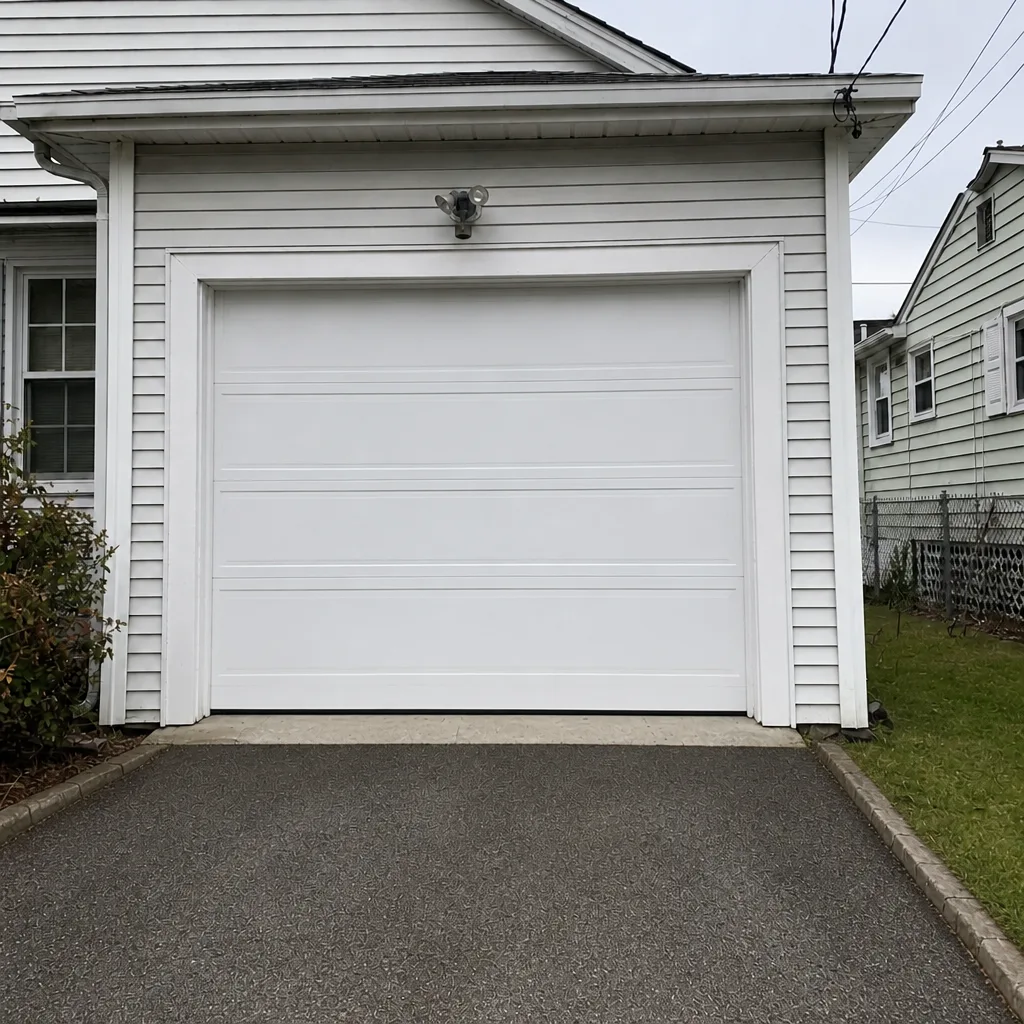
See the difference
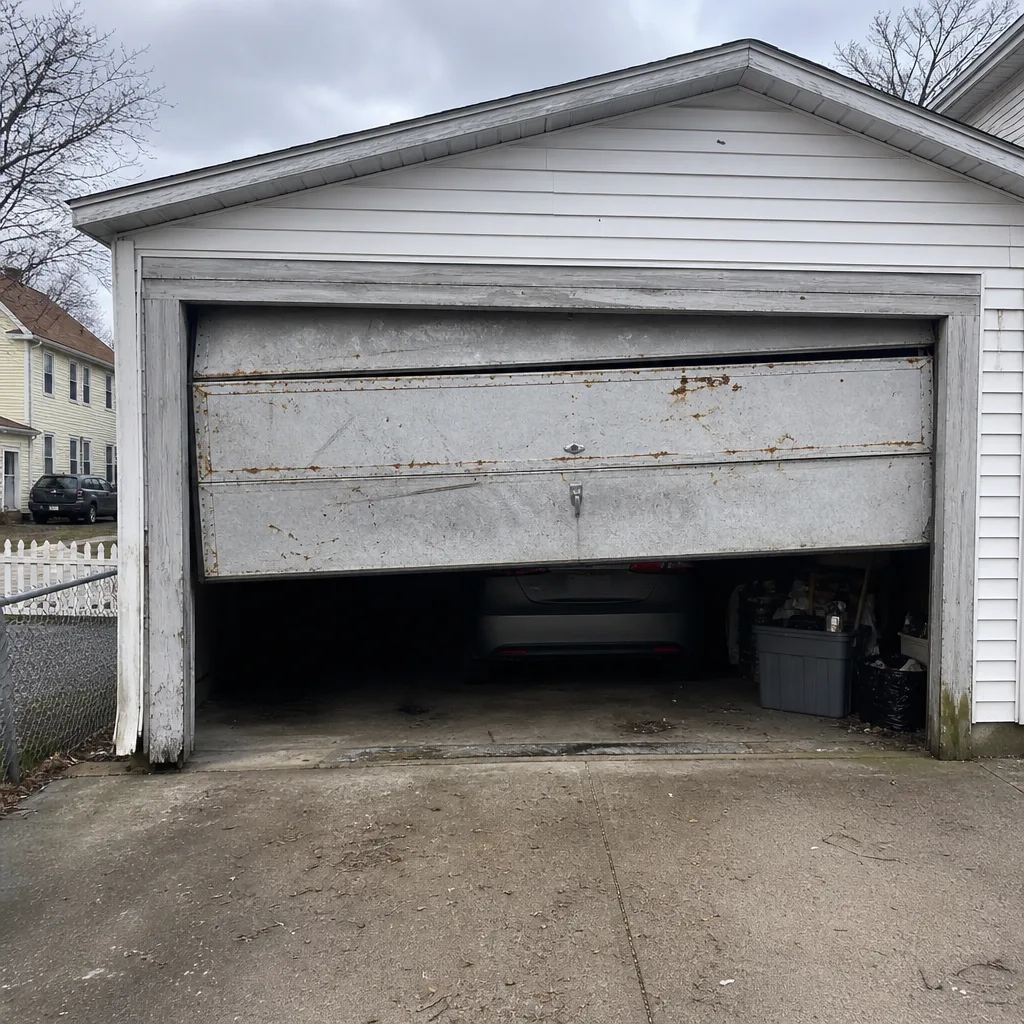 Before
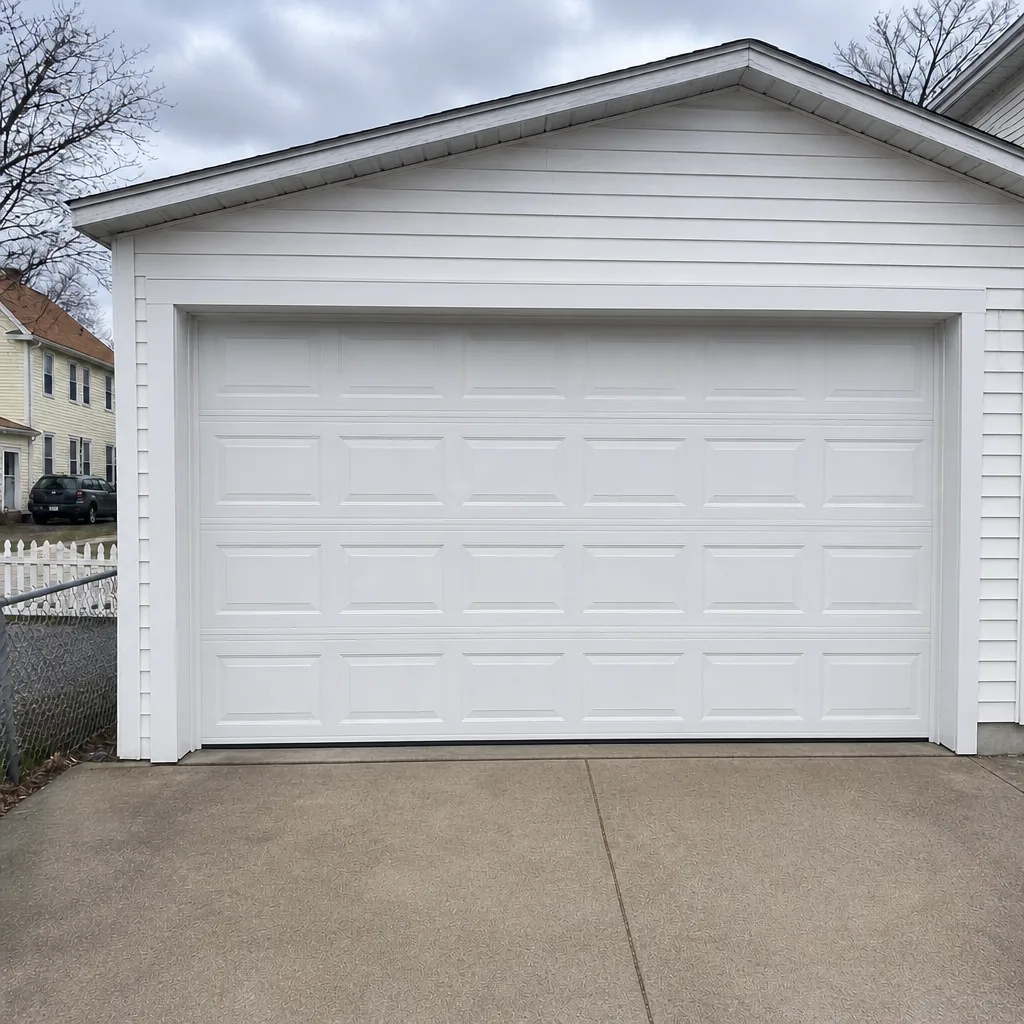 After
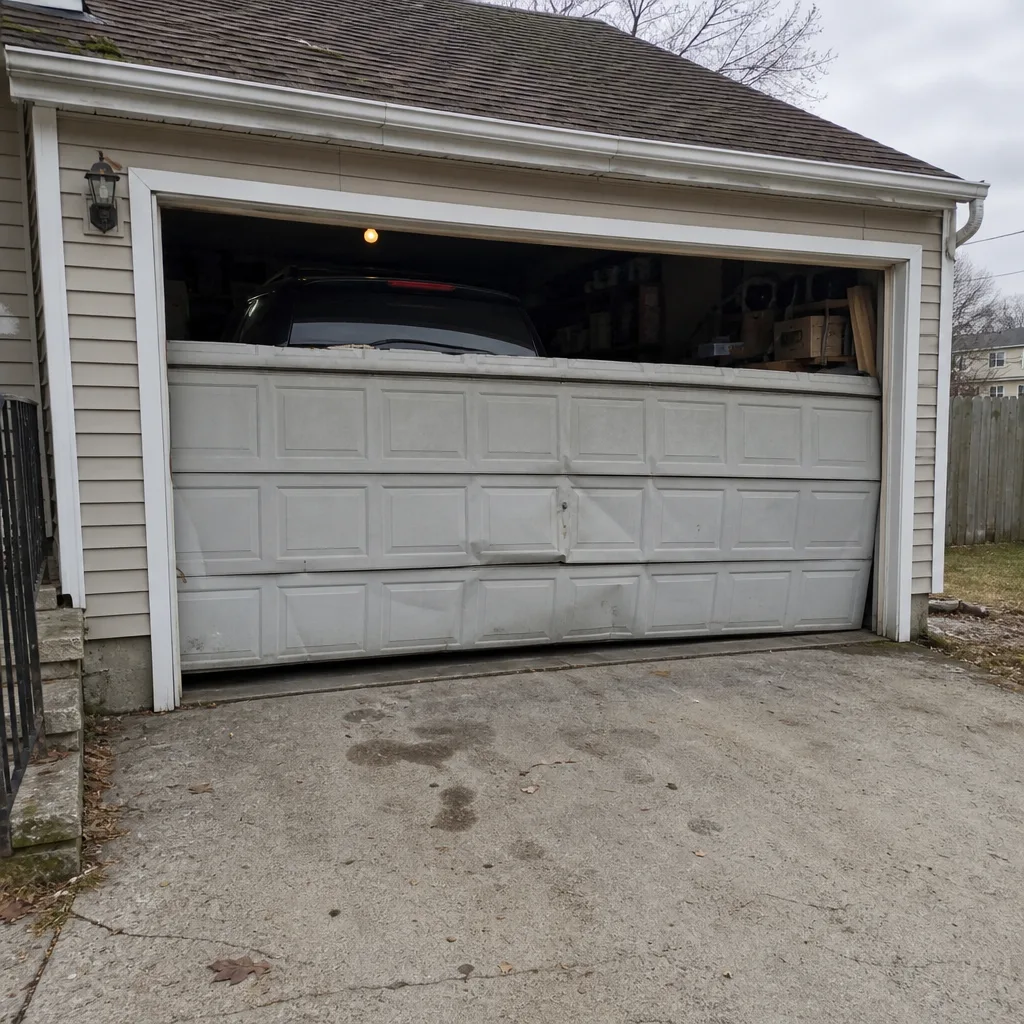 Before
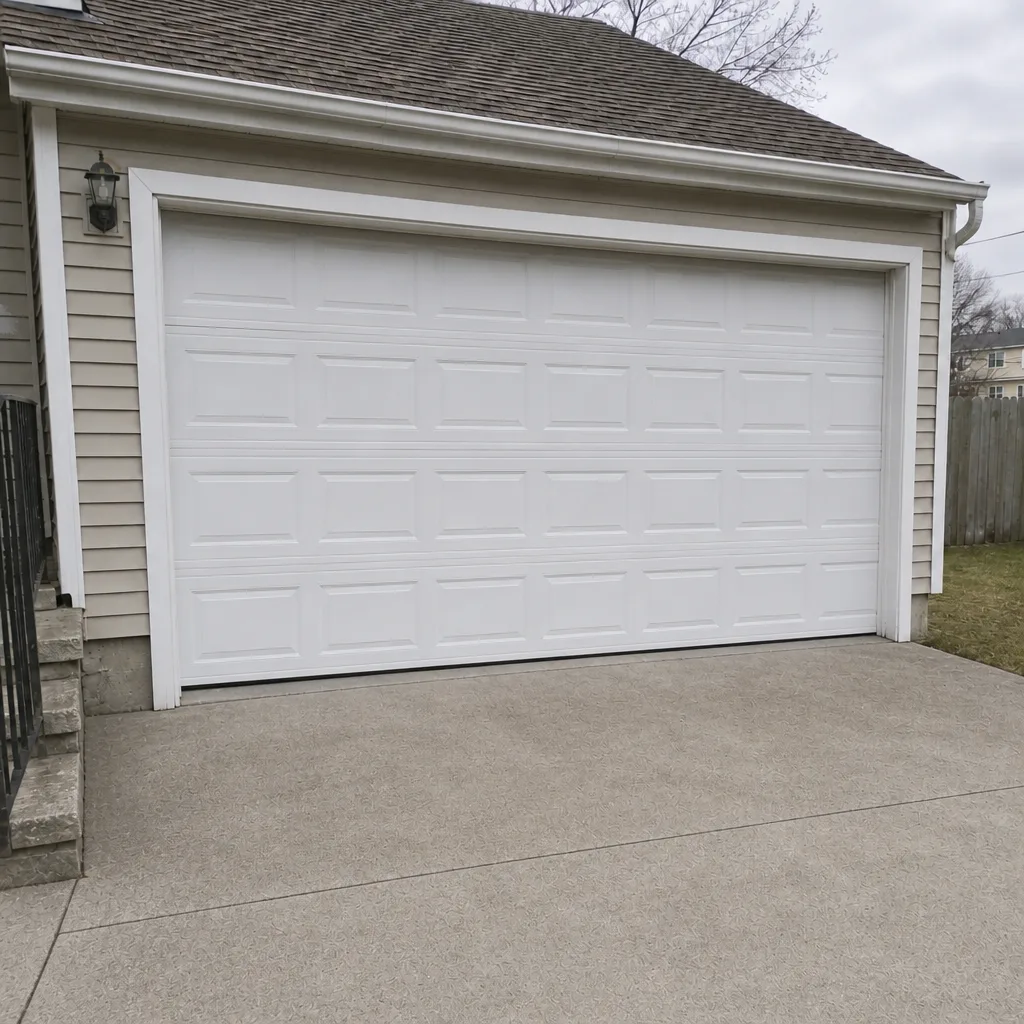 After
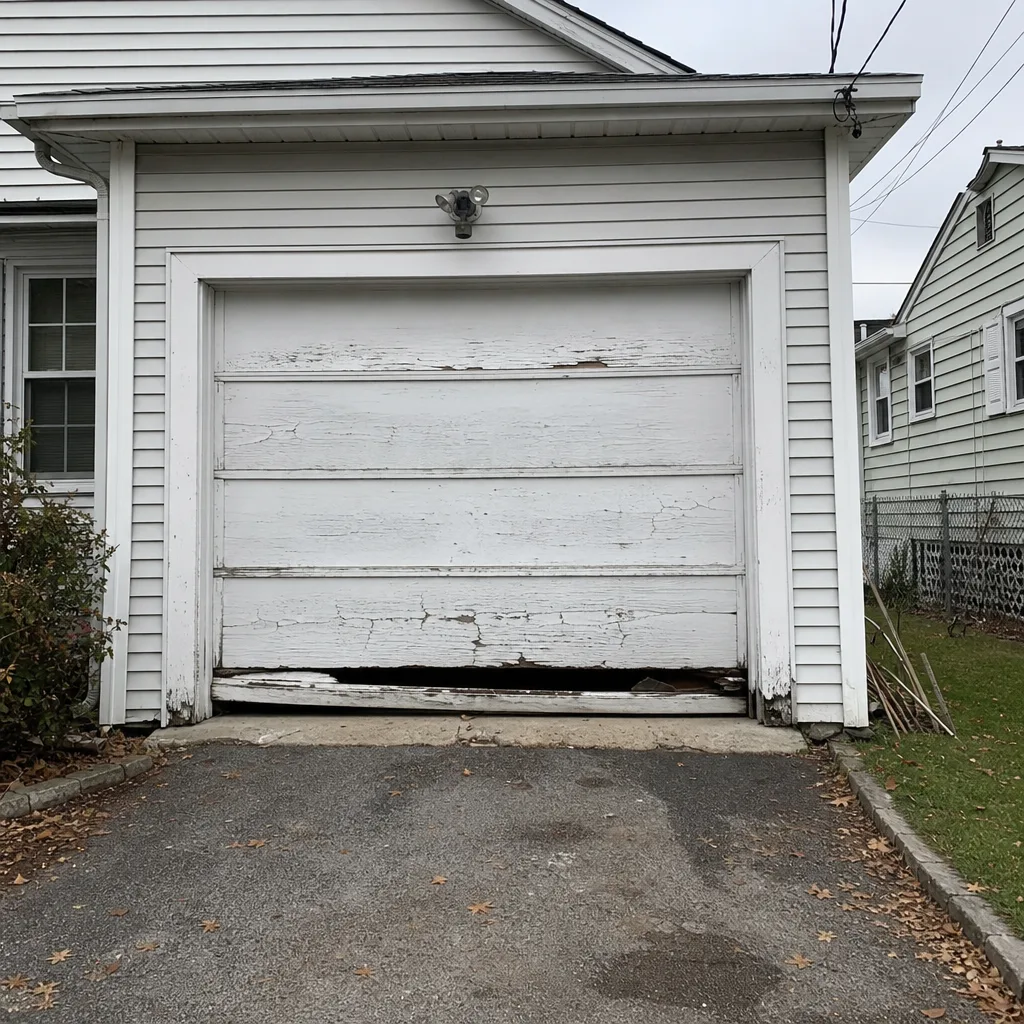 Before
 After
When to Call a Professional
Some jobs are genuinely DIY: lubrication, a sensor wipe-down, replacing a remote battery, maybe re-tightening hinge screws. But the moment a repair involves springs, cables, a door off its track, or the electrical components of an opener, it’s time to call. These are the situations where the risk of injury – or of turning a small fix into an expensive one – is too high:
- A loud bang from the garage followed by a door that won’t open.
- A door that hangs crooked, comes off its track, or binds on one side.
- A door that reverses on its own or won’t close at all.
- A frayed, slack, or visibly damaged cable.
- An opener that runs but doesn’t lift the door, or doesn’t respond to the remote.
- Water or daylight showing through a bottom seal after a heavy rain.
Garage Door Repair Brockton Pros offers free estimates in Brockton – call (833) 508-9262. We answer 24/7. Fast dispatch from 7am to 7pm, Sunday through Friday. And if the problem turns out to be something a same-day repair can’t solve – a warped door, an opener at the end of its life – we’ve got the installation side covered too, so you don’t have to start over with a different contractor.
Frequently Asked Questions
Broken springs are the most common garage door problem we work on in Brockton, followed by opener failures and doors coming off their tracks. Freeze-thaw cycles through the winter fatigue springs faster here than in more stable climates, and humid summers work on the wood and hinge hardware. If you hear a bang from the garage followed by a door that won’t lift, that’s almost always a spring.
Yes, most common repairs are handled same day, including broken springs, opener faults, and off-track doors. Call (833) 508-9262 for the fastest path to a technician. We answer 24/7, and a call outside dispatch hours is booked into the next opening, Sunday through Friday, 7am to 7pm. Emergency service is a genuine offering, not a sales line.
Garage door repair in Brockton typically ranges from about $100 for a roller-and-hinge replacement to about $400 for a spring or cable job, depending on the part and the door. Opener repair is usually in that same band, while a full opener replacement runs higher. The written estimate is the final price, and every price is agreed before any work starts. Call (833) 508-9262 for an exact quote – estimates are free.
No, the price you’re quoted on the written estimate is the price, and nothing gets billed that wasn’t agreed before work started. If the technician finds a second problem during the repair, they show you what’s wrong, explain the fix, and price it before touching anything. You decide whether to proceed.
Yes – the local professionals we connect you with are licensed and insured as required by the state. Our technicians have up to 14 years of experience, and they work on the specific brand of door and opener you actually own. Call (833) 508-9262 for a free estimate on your job.
Almost certainly. We work on LiftMaster, Chamberlain, Genie, Clopay, Amarr, Wayne Dalton, Craftsman, and Raynor systems, which covers most residential equipment in Brockton. If you’re not sure what brand you have, look at the sticker on the opener head or the edge of the door panel. Call (833) 508-9262 and we’ll confirm before scheduling.
The Bottom Line
A garage door is a system, and once you know its parts, the failures stop feeling like bad luck. In Brockton, freeze-thaw cycles and humid summers wear springs, cables, and seals faster than in milder climates, so inspections pay off more than most homeowners realize. Torsion springs generally outlast extension springs in New England, and matched pairs should be replaced together when one fails. Panels, hardware, and openers each fail in distinct ways, and knowing which is which prevents the expensive mistake of fixing the wrong one. Above all, one company handling the whole system – repair, springs, openers, and installation – prevents the finger-pointing that costs money and time. Call (833) 508-9262 for a free estimate.
Our technicians have up to 14 years of experience, and we’re factory-familiar with eight major door and opener brands. Whatever your door is doing, we can tell you what’s wrong before we quote you – and quote it once, in writing, before any work starts.
Written by the team at Garage Door Repair Brockton Pros.