
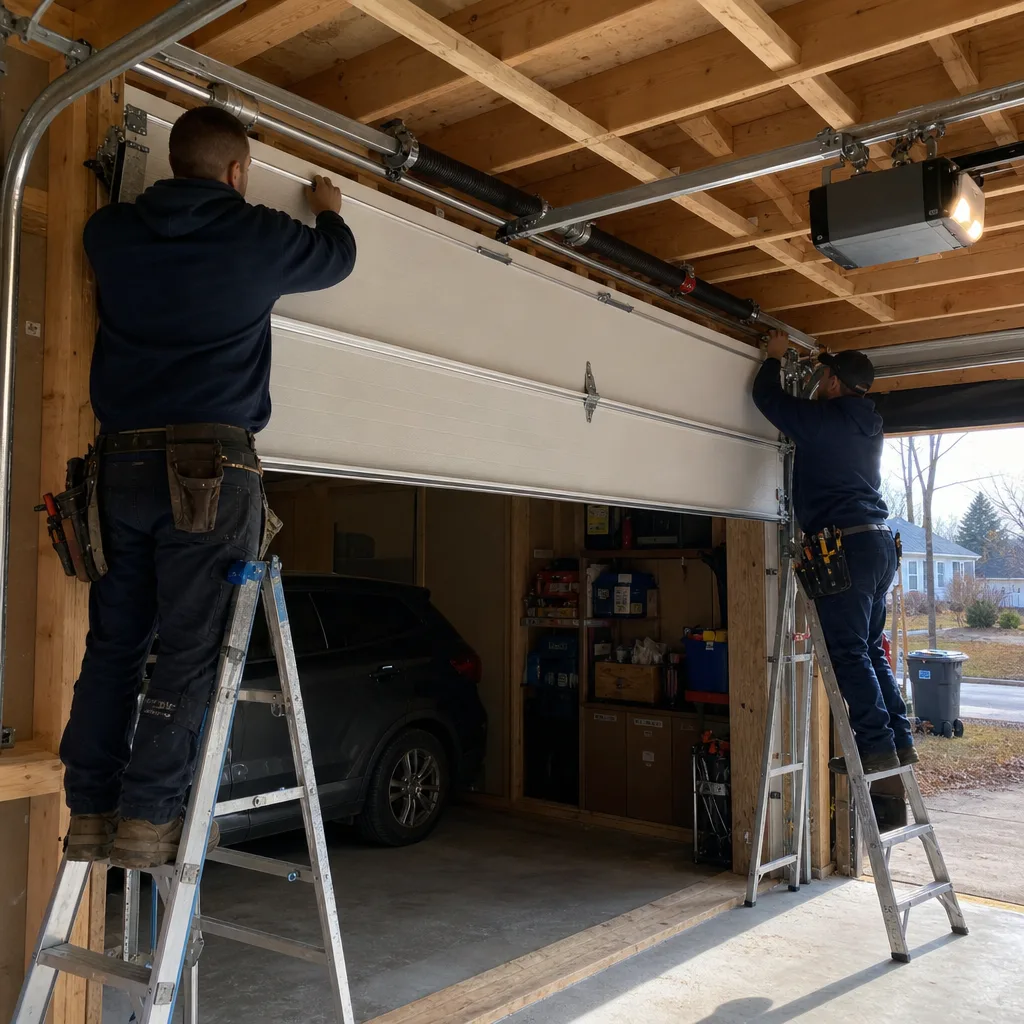
Last updated November 22, 2026
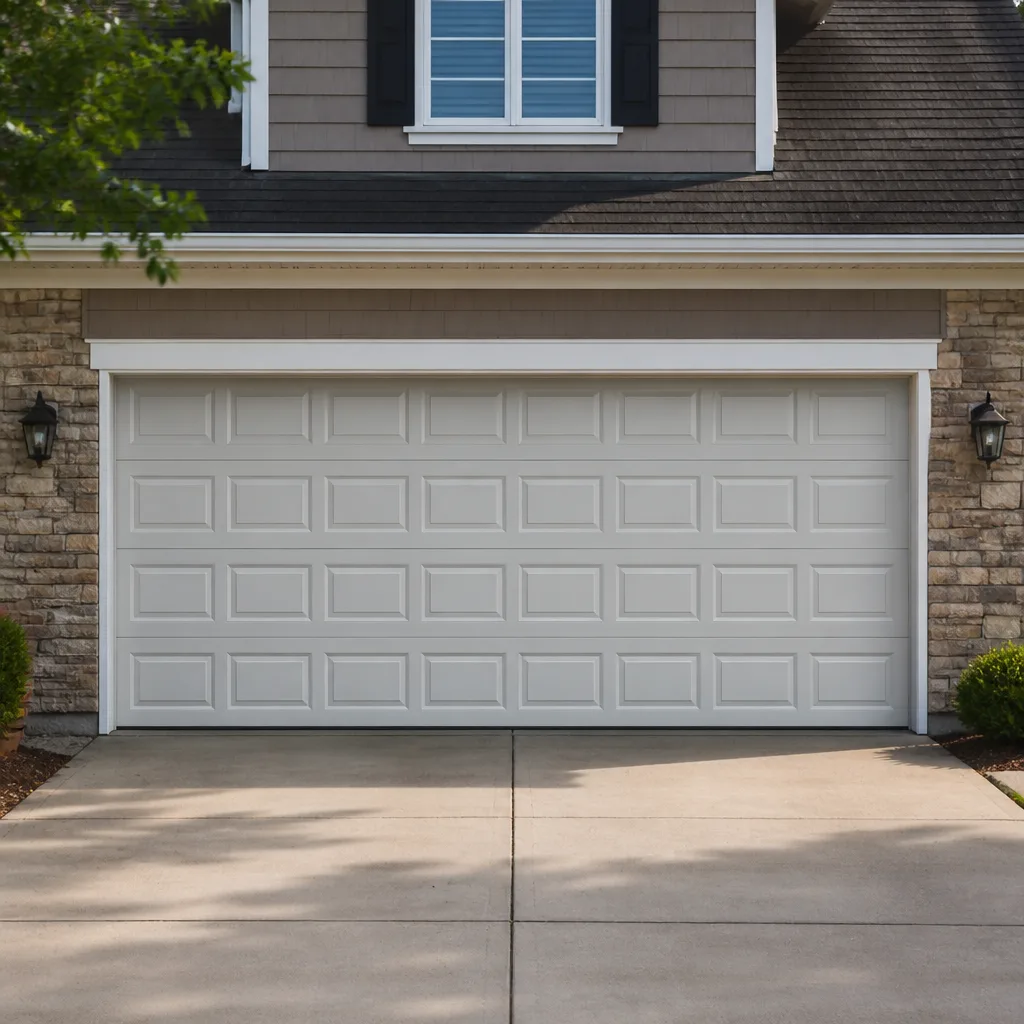 Raised-panel steel
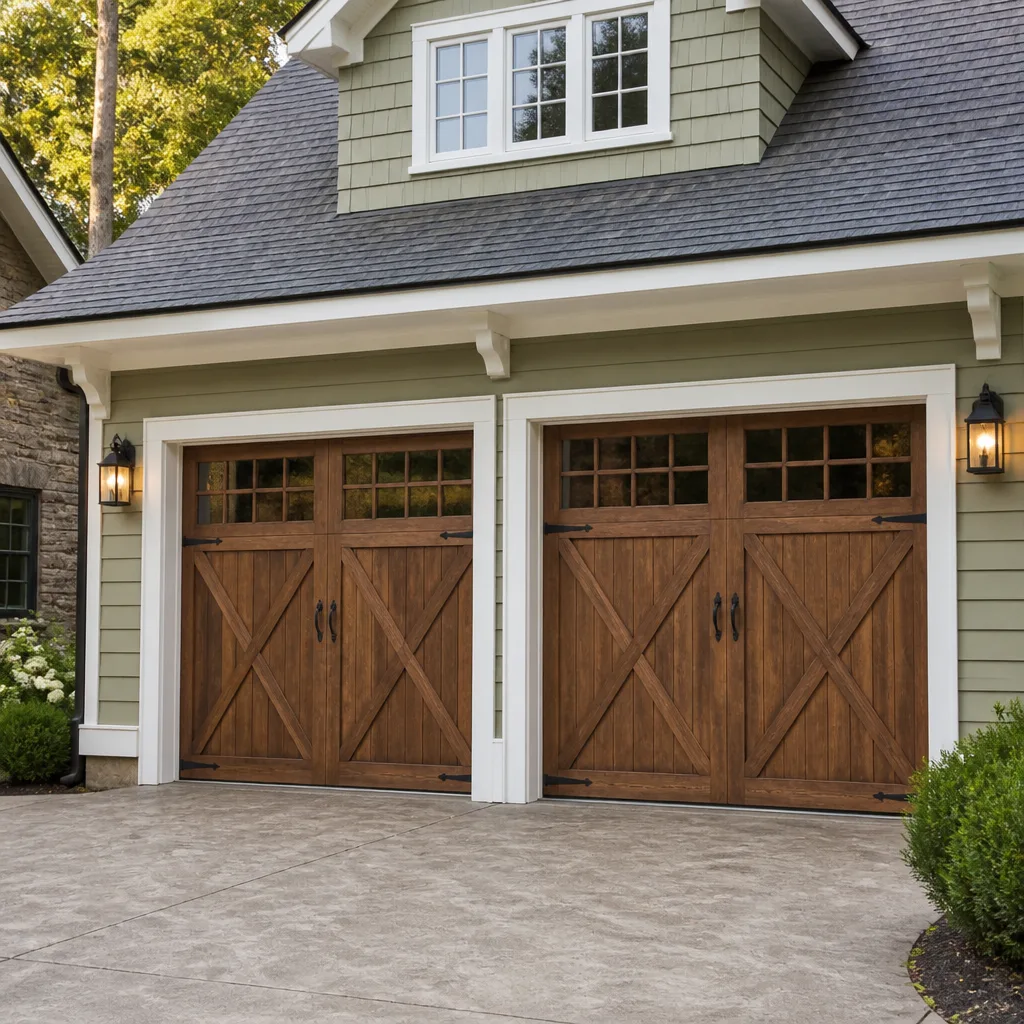 Carriage house
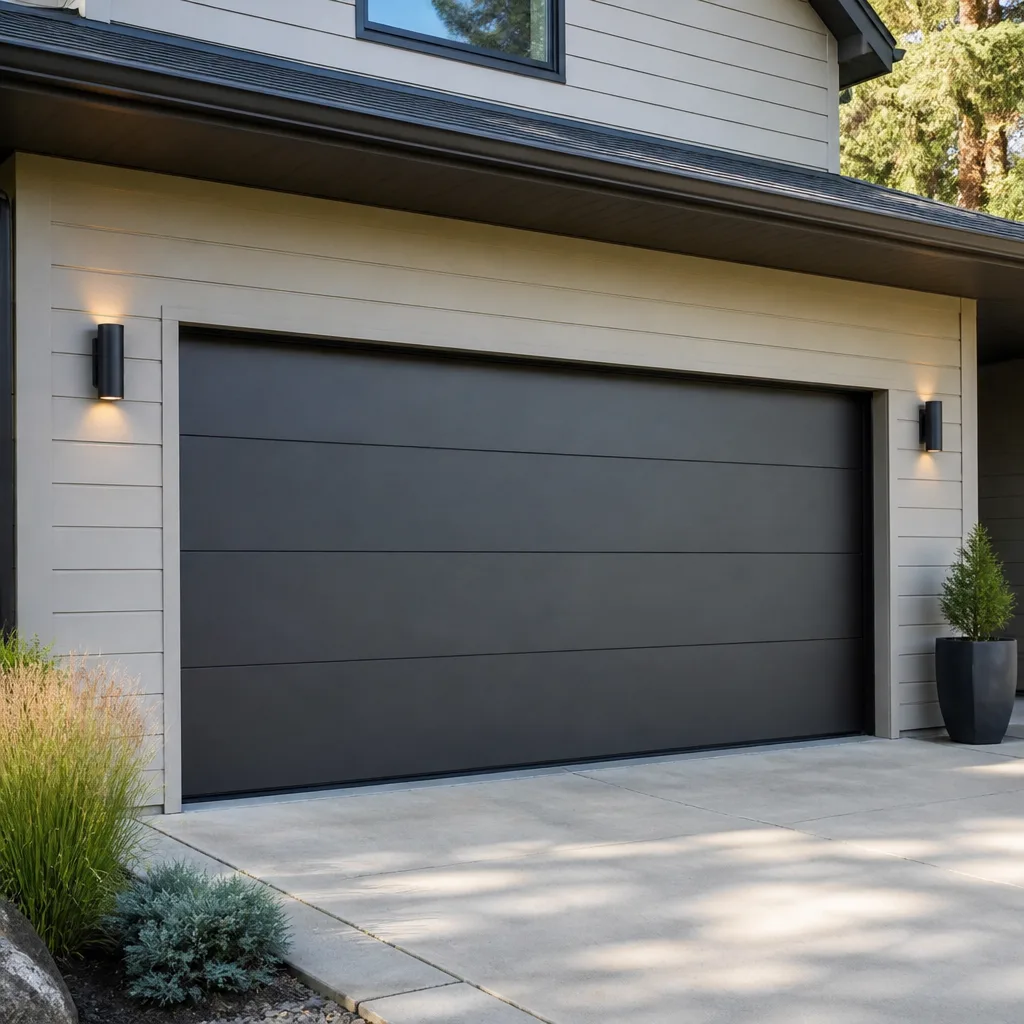 Modern flush
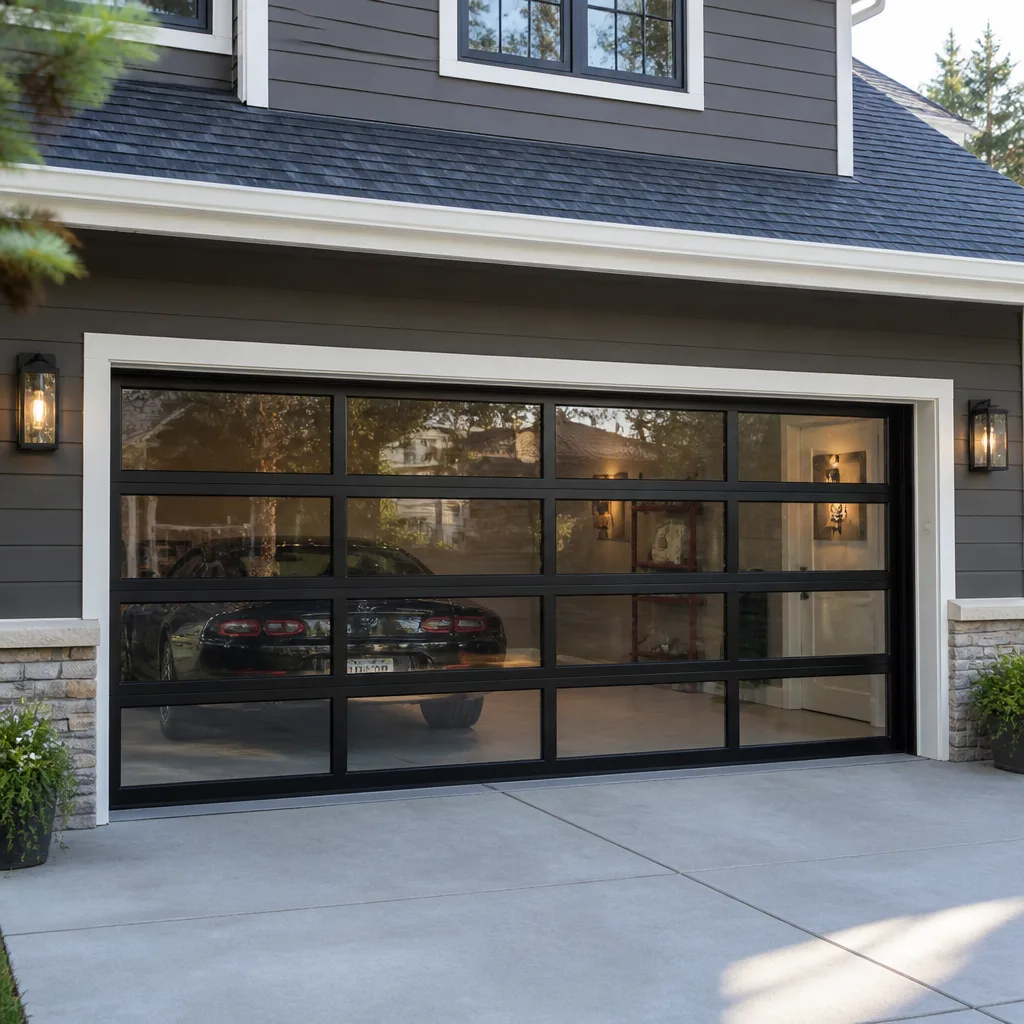 Full-view glass
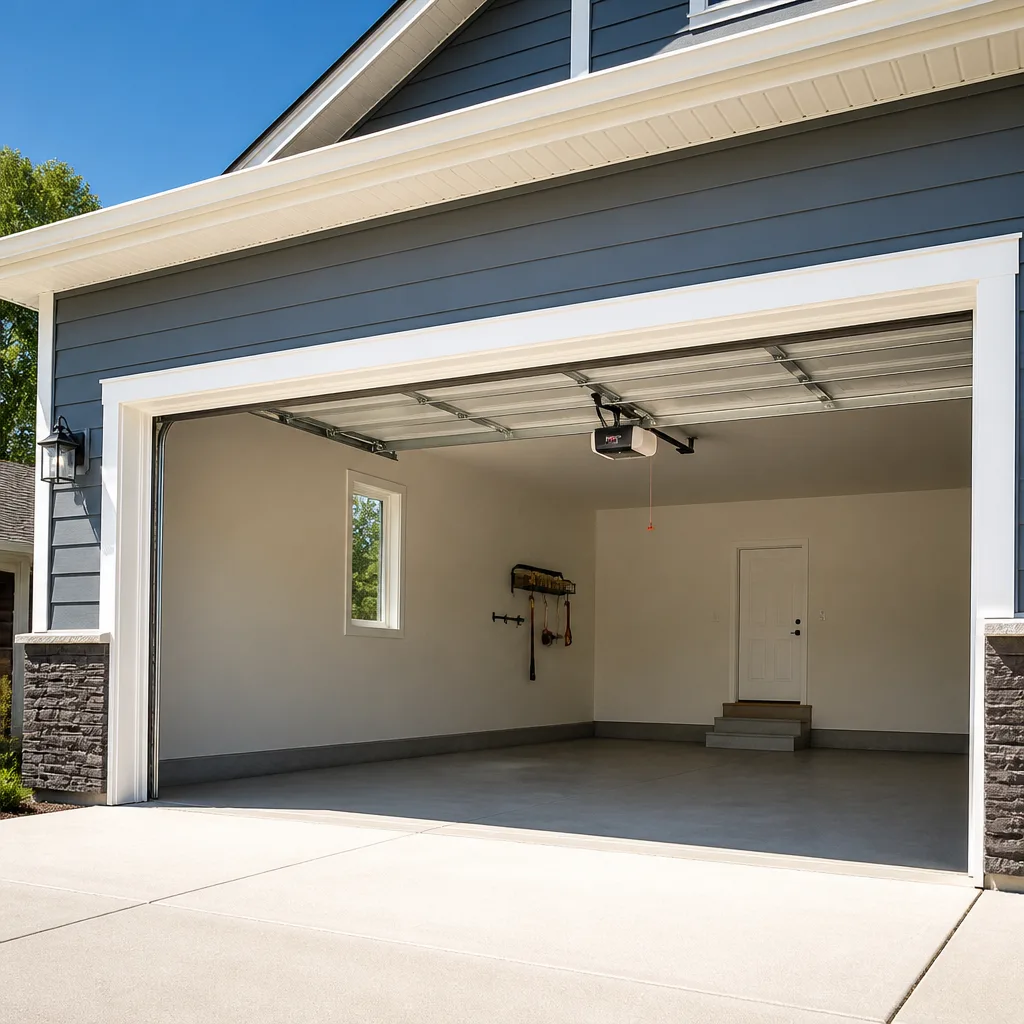 LiftMaster openers
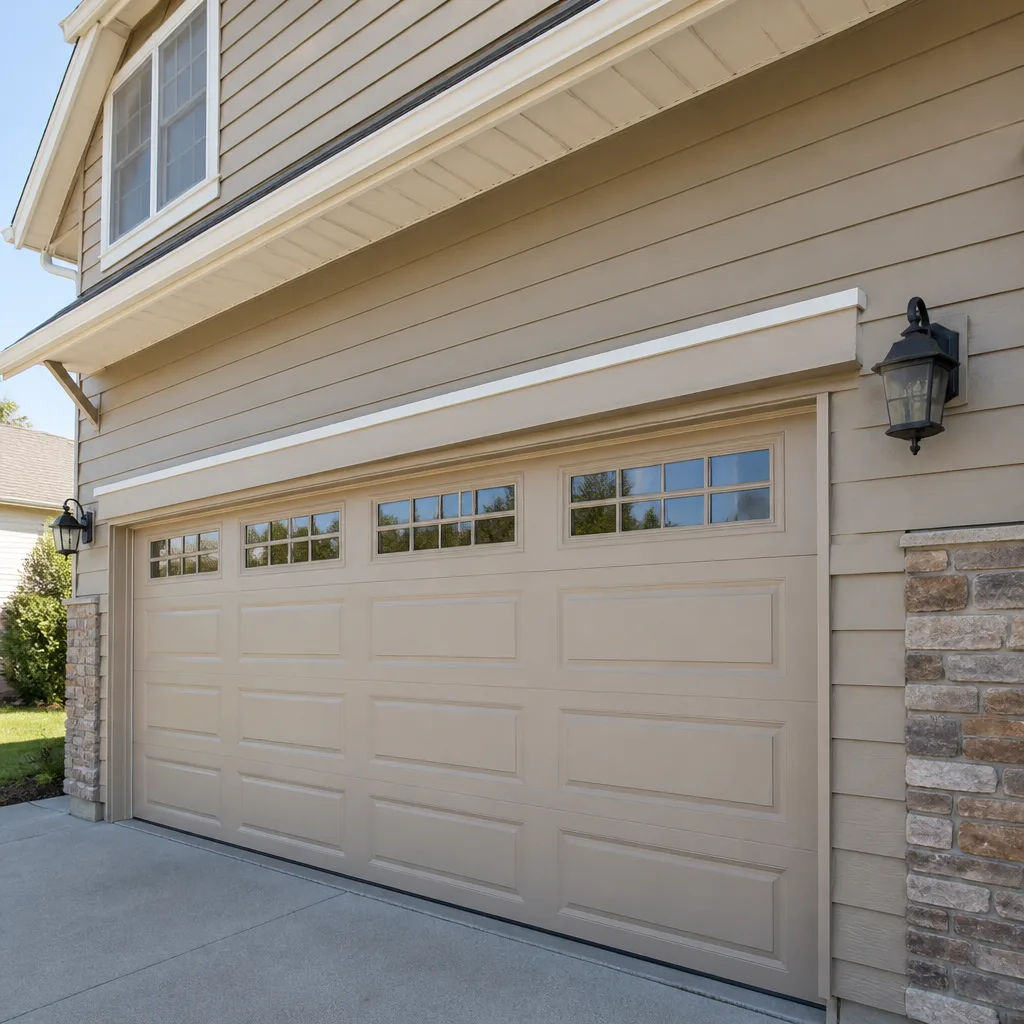 Chamberlain openers
Full 25-point door and opener safety check with every visit - springs, cables, rollers, tracks, and your LiftMaster or Chamberlain opener included
You get a price before we start. It does not change when the pro arrives.
Get your free estimateDIY vs Professional Garage Door: The Brockton Homeowner’s Decision Guide
A torsion spring under full tension stores enough energy to cause a serious injury. That’s not a scare tactic, and it’s not a line we use to push people toward paid work. It’s the mechanical reason the DIY calculus for a garage door is different from most home repairs. You can watch a dozen videos on how to reset a GFCI outlet or swap a showerhead and the worst-case outcome is a broken part and a trip to the hardware store. The worst-case outcome on a garage door torsion spring is a hospital visit. This guide draws the line precisely: which jobs a careful homeowner can absolutely handle, which ones a technician should own, and how the money compares on each. We’ll keep the Brockton angle specific, because the homes and weather here shape both the failure and the fix.
Quick Answer
Roughly 70% of common garage door maintenance tasks are safe for a homeowner who is willing to buy a few cheap tools: lubricant, sensor alignment, manual release checks, remote and keypad programming. Spring work, cable work, and any adjustment under live tension are technician territory regardless of your skill level, because the stored energy in those parts is dangerous and the parts themselves are cheap. If you can save a reliable $200 to $450 by doing something yourself, do it. If the savings are under $100 and the task involves the lifting mechanism, book a professional.
Styles & brands we work with
- Raised-panel steel
- Carriage house
- Modern flush
- Full-view glass
- LiftMaster openers
- Chamberlain openers
Table of Contents
- Where the DIY line actually sits
- What a homeowner can safely handle
- Why spring and cable work never makes financial sense as DIY
- The tool and parts cost reality
- The middle-ground cases: panels, rollers, slight tension
- What a failed DIY repair actually costs
- What’s specific to Brockton homes
- How to choose a professional when you need one
Where the DIY line actually sits
Most homeowners frame this as a skill question. “Am I handy enough to fix this myself?” That framing is why people get hurt. The better question is: if this goes wrong, what happens? That reframing does two useful things. It pulls emotion out of the decision and replaces it with a risk-and-cost calculation you can actually make.
On a garage door, that calculation splits cleanly into two categories:
- Low-stakes tasks: failure means a part that won’t move, a door that won’t close, or a sensor that keeps tripping. Annoying, not dangerous. You can troubleshoot, buy a new part, or call a pro if you hit a wall.
- High-stakes tasks: failure means a fast-moving heavy object in an enclosed space with a person in it. A torsion spring carries enough stored force to break bones. A cable that slips under load whips and can take off a finger. These are not tasks where “I’ll figure it out” is an option.
Here in Brockton, most of the doors we see are the standard 16-foot double-wide sectional doors on 1950s to 1990s colonials and capes. Those doors are heavy, they run on the same style of torsion or extension spring they always did, and they carry real stored force every time they’re open. The line between “safe to try” and “call someone” doesn’t move based on the neighborhood. It moves based on the part in front of you.
One more thing worth naming before we get into specifics: a garage door isn’t a single system. It’s a door, a counterbalance, a track, and an opener, all working together. That’s why a fix in one part can create a problem in another if the diagnosis was wrong from the start. We’ve seen plenty of DIY repairs where the homeowner replaced the opener because the door was sticking, when the real problem was a worn roller and a slightly bent track.
What a homeowner can safely handle
These are the jobs where a careful homeowner, a step stool, and an hour of time are all the situation calls for. None of them require disassembling anything that’s under tension.
- Lubrication. The single highest-value task on the whole list. A light garage door lubricant on the hinges, rollers, and track keeps the door running smoothly and quiets the worst of the noise. Twice a year is plenty. Do not use WD-40 in place of proper lubricant; it’s a solvent, not a lubricant, and it will actually strip the grease you need.
- Safety sensor alignment. If the door reverses on its own or refuses to close, the sensor eyes at the bottom corners of the track are the first thing to check. Wipe them clean, look for an obstruction, and confirm the LED on each is solid (not blinking). Small alignment nudges are safe.
- Manual release operation. Every door has a red release handle on the opener arm. Knowing how to use it, and testing that it works, is genuinely important. A homeowner who can safely put the door in manual mode isn’t trapped if the opener dies, and can let a car in or out during an outage.
- Remote and keypad programming. Adding a new remote or changing the keypad code is a menu-and-buttons job, usually documented in the opener manual or online by model. This is where brand familiarity matters a lot for DIYers. A Craftsman opener from the 1990s, a modern LiftMaster, and a Wayne Dalton door opener all have different programming sequences. Look up your exact model rather than guessing.
- Replacing a light bulb or battery. Openers on many doors (LiftMaster, Chamberlain, and Genie among them) have a light socket and a battery backup on newer models. These are simple.
- Visual inspection. Ten minutes of looking: any frayed cable, any bent track, any spring that’s visibly separated, any gap between the door and the frame. Catching a problem at the visual stage is often the difference between a cheap fix and an emergency call.
None of these take special tools. None of them require loosening a bolt under tension. All of them, done regularly, extend the life of the whole system and reduce how often you need to call anyone. For a deeper walkthrough of the routine service side, our garage door repair page covers what a professional tune-up actually includes.
Why spring and cable work never makes financial sense as DIY
Torsion and extension springs are the counterbalance that makes a 200-pound door feel weightless. They store the energy to lift that door every time you open it. When a spring fails, the energy releases instantly, which is why the failure sounds like a gunshot and why the door can slam shut.
Three things make this work a bad DIY bet:
- The parts are cheap. A replacement torsion spring or extension spring is not an expensive item. A matched pair doesn’t break the bank. The cost of the job is almost entirely labor and safety, not parts. You are not saving much by buying the parts yourself.
- The tools are not cheap. Torsion springs need winding bars. Cable replacements need specific crimping tools. These aren’t in most home garages and aren’t worth buying for a one-time job.
- The risk is asymmetric. If a professional gets it wrong, a licensed trade professional is covered by insurance and accountable for the outcome. If you get it wrong, the outcome could be a 200-pound door dropping on whatever is underneath it, or a winding bar slipping out of your hands at head height. There’s no cost calculation where that trade-off favors DIY.
Here’s the sentence that decides it: the amount you save by doing spring work yourself is less than the cost of a single urgent care visit. That’s the whole argument. The math doesn’t need to be any more complicated than that.
The other thing homeowners underestimate is how catastrophic a failed spring can be even if nobody gets hurt. The force snapping a spring free can fling the door into the track, bend the door, crack the top panel, and damage the opener arm and ceiling bracket. A spring replacement done right is a contained cost. A spring failure plus door damage plus opener damage is not.
Emergency service is genuinely available for this, and it’s a core part of what we do, not a premium add-on. If a spring snaps and the door is stuck down, trapping a car or leaving the house unsecured, we answer the phone. See our garage door spring repair page for the full picture, including how one spring versus a matched pair is typically handled.
The tool and parts cost reality
When homeowners tell us they were going to do the job themselves, the savings number in their head is often bigger than the savings number in reality. Here’s what’s actually involved in the common jobs, minus the parts quote itself:
- Spring replacement: winding bars (a matched pair), a safety cable kit for extension springs, and typically a pull-pin or locking pliers. For most homeowners, that’s a real outlay for tools they will never use again.
- Cable replacement: a crimping tool, cable cutters, and the cable kit. The tool cost is real.
- Roller replacement: a socket wrench, vice grips, and a replacement set. This is one of the few where the tools are already in your garage.
- Panel replacement: usually one panel and whatever tools the manufacturer calls for. Easy on some brands, tricky on others.
- Opener replacement: a drill, screwdrivers, a socket set, and sometimes a short ladder. Doable if you’re comfortable with overhead wiring and alignment.
Once you add tool costs to parts and then subtract what a professional call would cost, the savings on a spring job often collapses to well under a hundred dollars for a homeowner who has to buy the bars. For a cable job, sometimes it’s close to zero. And that’s before the risk is factored in.
That calculus is why spring and cable work is where we most often see homeowners reverse course and call. They’ve priced it out, realized the margin is thin, and decided the safety trade wasn’t worth it. That’s the right call most of the time.
The middle-ground cases: panels, rollers, slight tension
Not every task is clearly in one camp. Here are the three we get the most questions about, with a straight answer on each.
Replacing a damaged door panel
A single damaged panel on a sectional door (a dented bottom panel, a cracked window panel) can often be replaced without touching the spring system, because the springs aren’t touched during a panel swap. That makes it lower risk than spring work. The complications are matching the panel to the brand and model and getting the panel to seat cleanly in the track. Clopay, Amarr, Wayne Dalton, and Raynor each have different panel profiles and track fitments. If your door is newer and you can identify the exact model, a homeowner with a second set of hands can do this one. If the door is older or you can’t identify the model, brand-specific panel availability becomes the bottleneck and a technician is the faster route.
Adjusting spring tension slightly
Short answer: don’t. A “slight” tension adjustment still requires putting a winding bar on a live torsion spring, and the door should be in a specific position with the opener disconnected. There is no safe way to change spring tension without the right technique and the right tools, and the margin for error is a fraction of an inch. If the door feels heavy or the opener strains, the tension isn’t the fix; the diagnosis is.
Replacing rollers on a low-clearance track
This one is genuinely DIY-friendly if you’re careful. Each roller slides out of the hinge with the track released and the door in the down position. Low-clearance track (common on modern homes with shallow garages) actually makes it easier because there’s less panel travel to manage. The catch is the door weight. Never remove a roller near the bottom of the door without putting a vice grip on the track above the next roller. Otherwise the door moves and the roller you’re holding becomes a projectile.
If you’re not sure which category your problem fits, that’s a diagnostic question rather than a repair one. We can often tell from a couple of questions on the phone, and we’d rather answer those than have a homeowner start a repair that should have been a different one.
What a failed DIY repair actually costs
Here’s the specific thing that most DIY garage door content doesn’t tell you: a failed repair usually doubles the eventual professional bill. Not because technicians charge more to fix someone else’s work, but because the second visit now has two jobs to do: undo the DIY attempt, and then fix the original problem.
Common scenarios and what each typically involves:
- Replaced the opener, didn’t fix the door. The door was binding, which burned out the opener. New opener gets installed, door still binds, new opener burns out too. Now the owner has a new opener plus a dead one plus the original door problem, all needing to be sorted.
- Adjusted the spring tension wrong. Door is heavy, closes unevenly, and the opener is straining. Fix requires a re-set of tension by a technician plus possible damage to the opener’s drive gear from running under strain.
- Replaced one spring where a pair was needed. Springs wear in matched pairs. Replacing only one leaves the door imbalanced and shortens the life of both. Now both springs plus track alignment are on the bill.
- Bent the track while removing a roller. The door needs a track reset or track replacement, which is a different job than the roller swap that started it.
- Reversed the sensor wires. Door won’t stay closed, no obvious cause, technician needed to sort out which part is at fault.
None of these are catastrophes. They’re just extra cost and extra time. That’s the real risk of DIY on this equipment: not that you’ll get hurt on every job, but that one in three attempts turns a single-visit repair into a two-visit repair. For a homeowner in Brockton whose door has to work before they leave for the day, the two-visit version is the painful one.
If you’re in the middle of a DIY job that’s not going the way you expected and want a same-day professional opinion, that’s exactly the moment to call. Your door. Fixed today. The call itself is free.
What’s specific to Brockton homes
Brockton’s housing stock shapes what fails and how often. Most of the homes we work on are capes, colonials, and ranches built between the 1940s and 1990s. The garage doors in that stock are typically heavy steel or wood-composite sectional doors on fixed track. Somebody who bought their house in Brockton in the 2000s is often still running the original door and opener, and the opener in particular is due for service.
The climate here does two things to garage doors:
- Temperature swings cause metal to expand and contract. That’s the common cause of track alignment drift, which shows up as a door that rubs, sticks, or binds halfway up. It’s also why the counterbalance spring is stressed more in a New England winter than in many other climates.
- Freeze and thaw cycles open seams in the concrete slab and shift the frame slightly, which can put the door out of square. When the door binds on one side and not the other, this is often the underlying cause.
Those climate effects mean spring and track service on a Brockton door is a real maintenance item, not optional. A door that strains quietly for two winters is a door that’s going to fail on a cold morning. That’s why spring work here so often shows up as “snapped this morning, car trapped” rather than “noisy, can wait.”
If your issue is with the opener specifically, not the door, we work with the actual control systems on LiftMaster, Chamberlain, Genie, and Craftsman rather than a generic diagnostic. Brand-specific matters here because a LiftMaster and a Craftsman from the same era can fail for very different reasons. Our garage door opener repair page has the detail.
The other thing worth saying about Brockton: there’s no shortage of “garage door” tailgate operators advertising on neighborhood apps. If you’re calling someone anyway, it’s worth knowing what to ask before you book.
How to choose a professional when you need one
If you’ve decided to call a professional, the next question is which one. A few things to check, in order of how much they matter:
- Ask what brand they work on. Garage door systems are not interchangeable. A technician who works on Clopay doors regularly knows how to seat a panel correctly on the first try. One who works mostly on Amarr is in a different mental model. Ask specifically before booking.
- Confirm the estimate is written, free, and set per job. Any reputable garage door professional quotes a specific price before work starts. The written estimate is the price. No surprise numbers after the fact, no “well, we found extra.”
- Ask about the full cycle. Can they handle repair, opener repair, spring repair, and full installation? If not, and your door needs one of those next, you’ll be starting over with a new provider.
- Ask how emergency work is handled. Not every garage door company runs emergency service. If a spring snaps on a Sunday, you want to know whether the number you’re calling will actually pick up.
- Ask about vetted, licensed, insured local pros. A garage door is heavy machinery attached to someone’s home. The professional working on it should be insured for the job.
None of this is glamorous. It’s just the questions worth asking before somebody shows up and starts loosening bolts over your car.
Common Mistakes to Avoid
- Treating a torsion spring like a garage-spring project. It’s high-tension machinery. Any project on it requires the right winding bars and the right technique, and the first attempt is not the time to learn either.
- Replacing one spring when the door has a matched pair. A new spring next to a worn one puts uneven load on the door and both springs wear faster. If the door has two springs, both get replaced together.
- Using WD-40 in place of lubricant. It strips the grease that’s actually protecting the moving parts. A proper garage door lubricant is a different product.
- Running the opener with the door in manual release. A door in manual release is not connected to the opener and the opener arm can slam into the carriage. Always reconnect before running the opener, and re-engage the release carefully.
- Removing rollers near the bottom without a vice grip on the track. The door moves, the roller becomes a projectile. A single vice grip on the track above the working roller prevents it.
- Buying a “universal” panel for a Clopay, Amarr, Wayne Dalton, or Raynor door. Panels are brand and model-specific. Manufacturers don’t share profiles, and a panel that almost fits is worse than no panel.
- Booking an out-of-state or ambiguous company because the price looked low on a home-service app. A quoted price is not the same as a locked price. Ask for a written estimate before work begins.
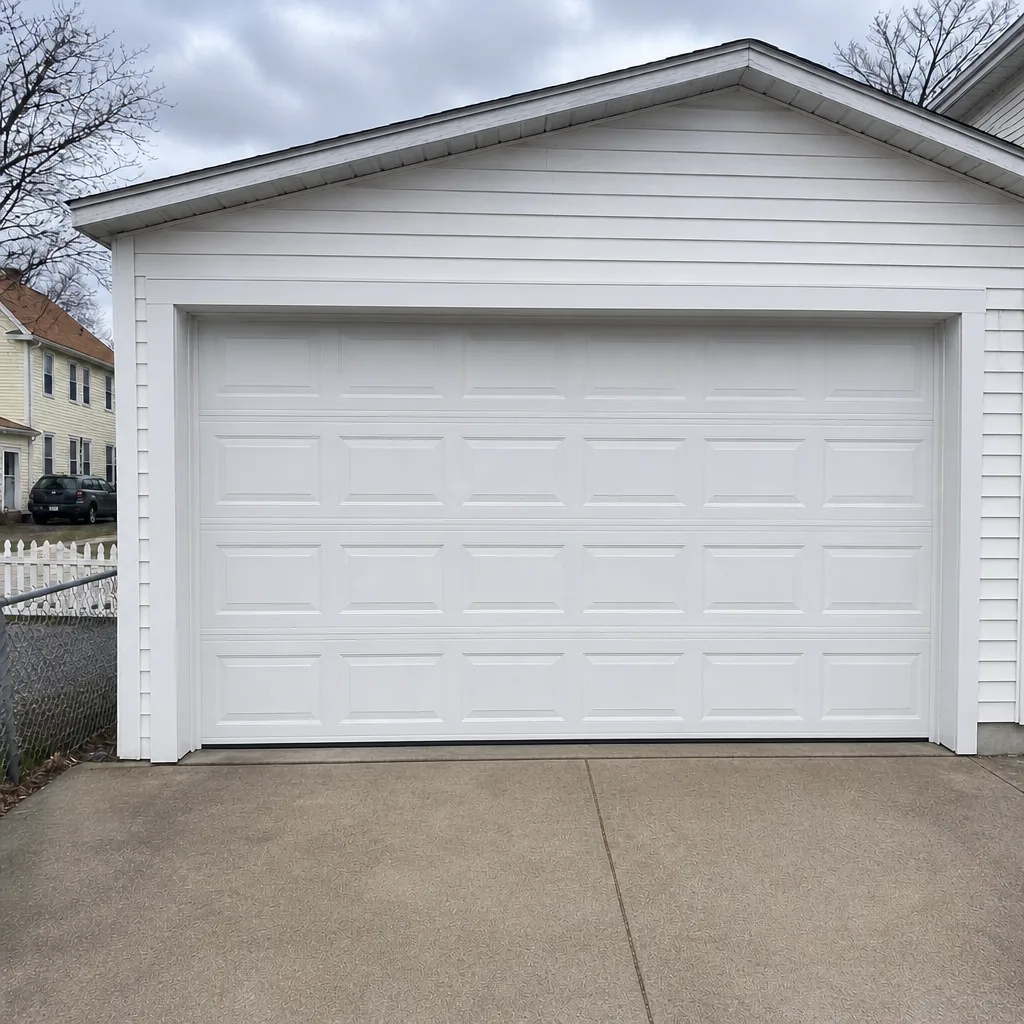
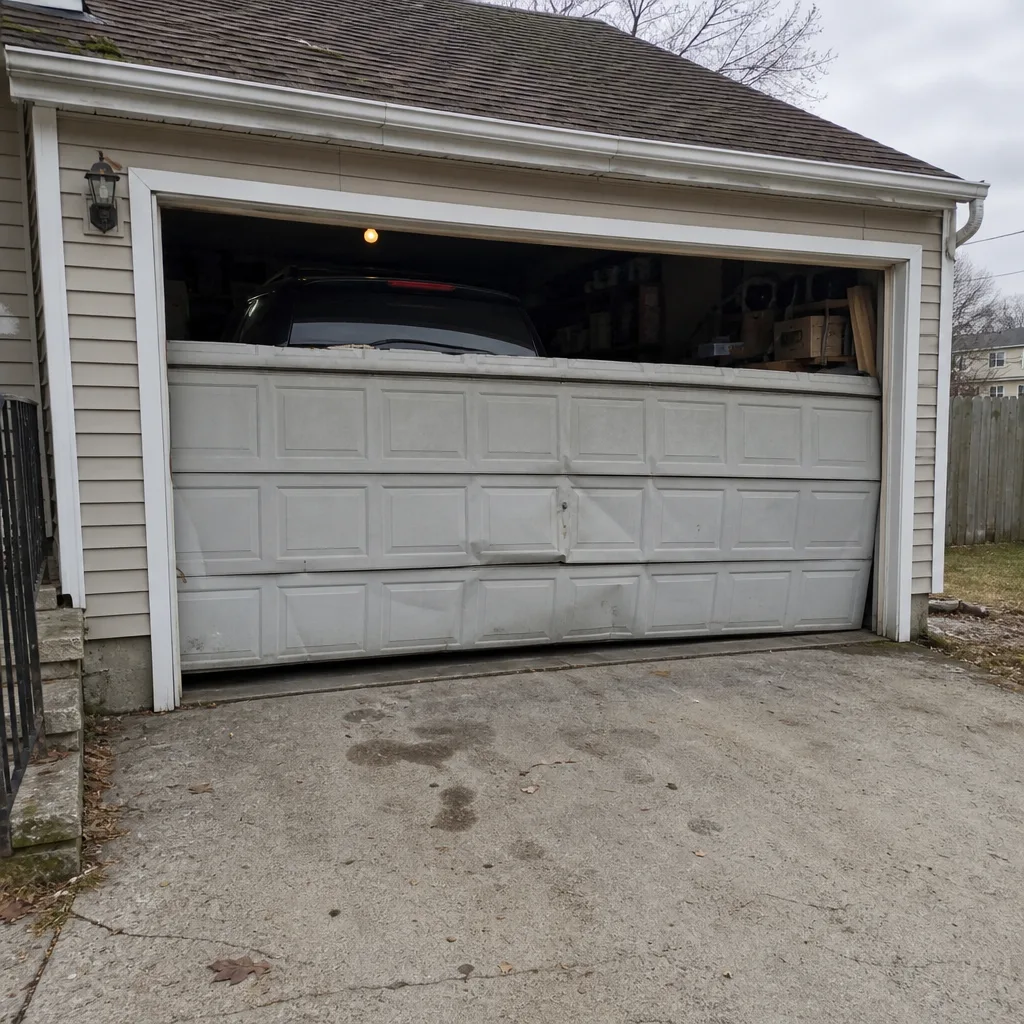
See the difference
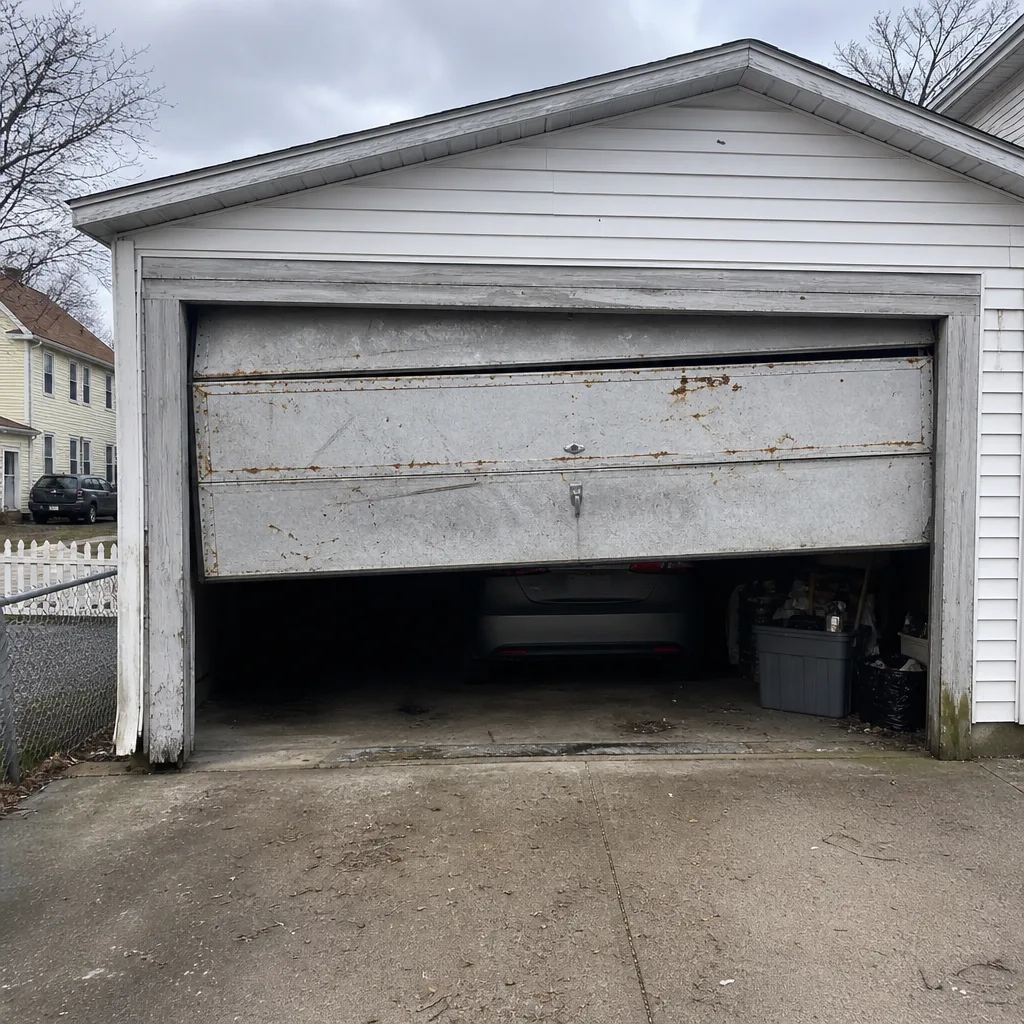 Before
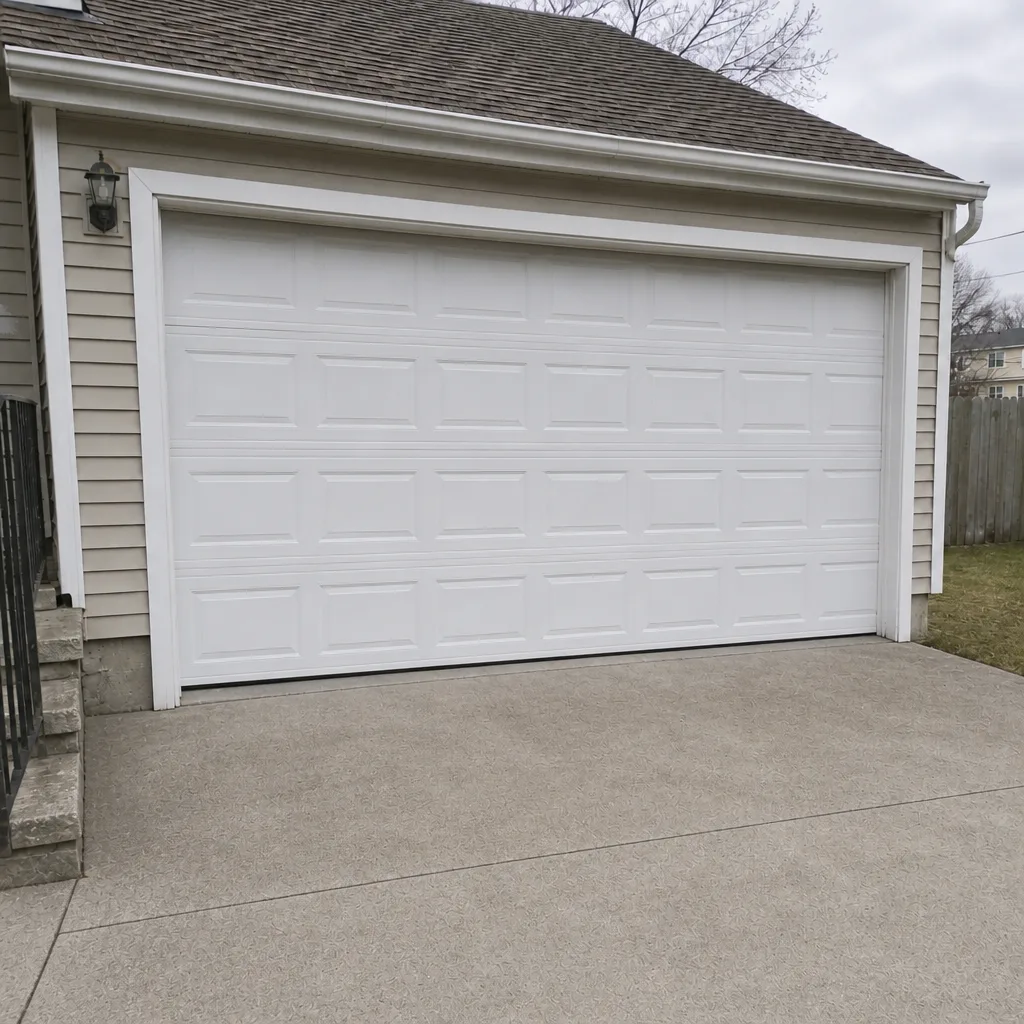
 After
 Before
 After
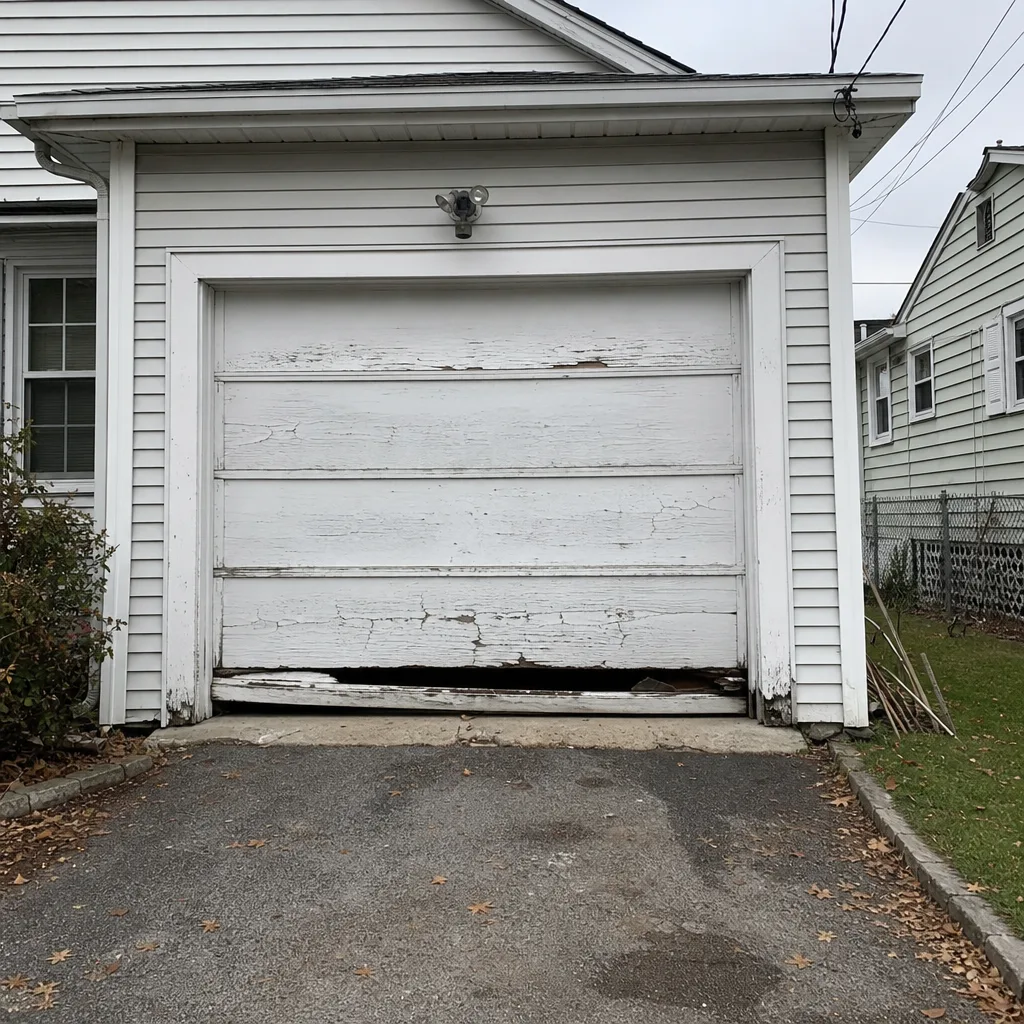 Before
 After
When to Call a Professional
Call a professional – don’t attempt it yourself – in these scenarios: any noise that sounds like a gunshot from the garage (spring failure), any door that closes unevenly or drops the last few inches (spring or cable), any cable that’s visibly frayed, kinked, or off the drum (cable failure), any door that’s come off its track entirely (frame and door damage), any opener that’s stopped working after a door problem (opener likely damaged), any door that won’t stay closed (sensor, limit switch, or opener logic), and any panel or door damage on a door you’re not sure you can identify by brand and model.
If it’s not clear which category your issue falls into, call and describe what you’re seeing. We can usually tell from a couple of questions whether it’s a job you can do or a job we should. Garage Door Repair Brockton Pros offers free estimates in Brockton. Call (833) 508-9262. We answer 24/7. Fast dispatch from 7am to 7pm, Sunday through Friday.
Frequently Asked Questions
No, or at least: not safely, and not in a way that saves meaningful money. A torsion spring stores enough energy to cause serious injury, the parts are cheap (so there’s little to save), and the tools aren’t in most home garages. The right answer for almost every homeowner is to call a professional.
On low-risk tasks like lubrication, sensor alignment, or remote programming, you’ll save most of a service call, which is worth doing. On spring or cable work, the savings after buying the tools and parts are usually under $100, and sometimes close to zero. It’s rarely worth the risk.
Most openers can be repaired, even older ones. The common repairs are logic board, gear kit, drive assembly, and safety sensor. Brand-specific diagnostics matter here because a Craftsman, LiftMaster, Chamberlain, and Genie each have different failure modes and repair economics. Call (833) 508-9262 for an exact quote on your model, and the estimate is free.
If the door opens and closes smoothly, isn’t louder than usual, and the springs and cables look intact, you’re in maintenance territory and DIY is fine. If anything is noisy, rough, slow, uneven, or if you can see a physical defect, it’s a repair call. The line is whether the door works as it should, not whether it’s making a specific sound.
Most spring repairs are quoted per spring, and a matched pair is typically replaced together, so the pair cost is roughly double a single spring. The written estimate you get before work starts sets the final price, so ask for it in writing. Call (833) 508-9262 for a free estimate specific to your door.
Same-day service is available for repair emergencies, including broken springs, off-track doors, and opener failures. We answer 24/7, with fast dispatch from 7am to 7pm, Sunday through Friday. Call (833) 508-9262 and describe what the door is doing.
The Bottom Line
The DIY-versus-professional line on a garage door isn’t drawn by skill. It’s drawn by risk. Lubrication, sensor checks, remote programming, and visual inspection are all reasonable DIY work and they genuinely extend the life of the door. Spring work, cable work, and any adjustment under live tension should always go to a technician, because the parts are cheap, the risk is high, and the savings aren’t. The middle-ground cases (single panel replacement, roller swaps on a low-clearance track) depend on whether you can identify the brand and model of your door.
Where a lot of DIY jobs go wrong, in our experience, is when a homeowner starts a repair without knowing what’s actually broken. That’s the reason we tell people the diagnosis is worth more than the wrench. A garage door repair visit from us includes a diagnosis and a written price before anything is loosened, so you know what you’re paying and why. If the diagnosis turns out to be a maintenance task, we’ll tell you that too.
Whether you’re facing a snapped spring at 7am or comparing installers for a full replacement, one company can walk it from a fix to a brand-new door. Factory-familiar with LiftMaster, Chamberlain, Genie, Clopay, Amarr, Wayne Dalton, Craftsman, and Raynor, our technicians have up to 14 years of experience and see the same handful of failure patterns on the same handful of door brands every week. Tell us what your door is doing, and we’ll tell you whether it’s a job for the toolbox or a job for us. Call (833) 508-9262 for a free estimate. We answer 24/7, with fast dispatch from 7am to 7pm, Sunday through Friday. Start with the diagnostic conversation, and the fix usually follows.
Written by the team at Garage Door Repair Brockton Pros.